






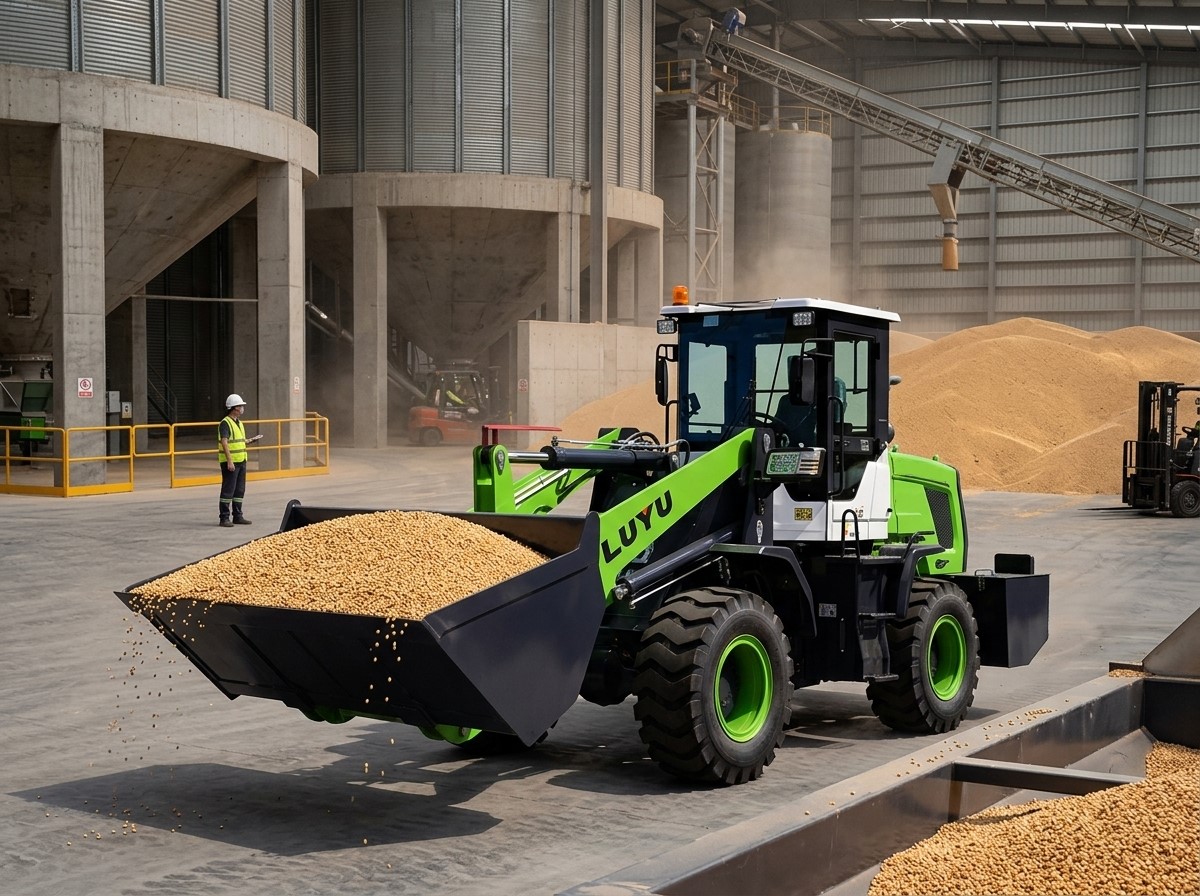
How to Choose a Grain Loader? Loose-Grain Handling Equipment Selection with LUYU LK956 as an Example
Contents
1. Grain Collection: Why the Dedicated Bucket Deserves Attention
2. Main Parameters of the LUYU LK956 Grain Loader
3. Which Jobs a Grain Loader Actually Covers
4. Which Parameters to Compare When Buying a Grain Loader
Grain handling doesn't end with the harvest. There's still loose grain to gather, loads to move around the yard, and trucks to fill. Each task calls for suitable handling equipment. Grain moves in and out fast during harvest and bulk collection, and when the handling machine doesn’t suit the site, loading and unloading get held up.
For farms, grain collection sites and agricultural processing yards, choosing a grain loader on engine power or bucket size alone leaves too much unanswered. Whether the machine meets the real loading demand, whether the dump height suits the target, whether the site can take the whole machine working — these are the things to sort out before you buy. LUYU's new LK956 grain loader gives you a reference point for this kind of choice.
1. Grain Collection: Why the Dedicated Bucket Deserves Attention
Grain loading is not the same job as moving gravel or earth. Loose grain has to be gathered, loaded, and shifted over short distances, and on a grain bucket loader the shape and volume of the bucket decide how much it takes per pass and how the machine handles the pile.
If the machine is mostly there to handle grain — as a grain warehouse loader would — capacity alone is not enough. The way the grain is stacked, the area the machine works in, and what the receiving vehicle takes all matter. A small bucket means more passes. Don't just choose the largest volume. If you ignore the load rating and dumping conditions, the result may not meet your expectations.
So, define the main job first, then judge whether bucket capacity, rated load, and dump height fit the work. Comparing a single number in isolation gets you nowhere.
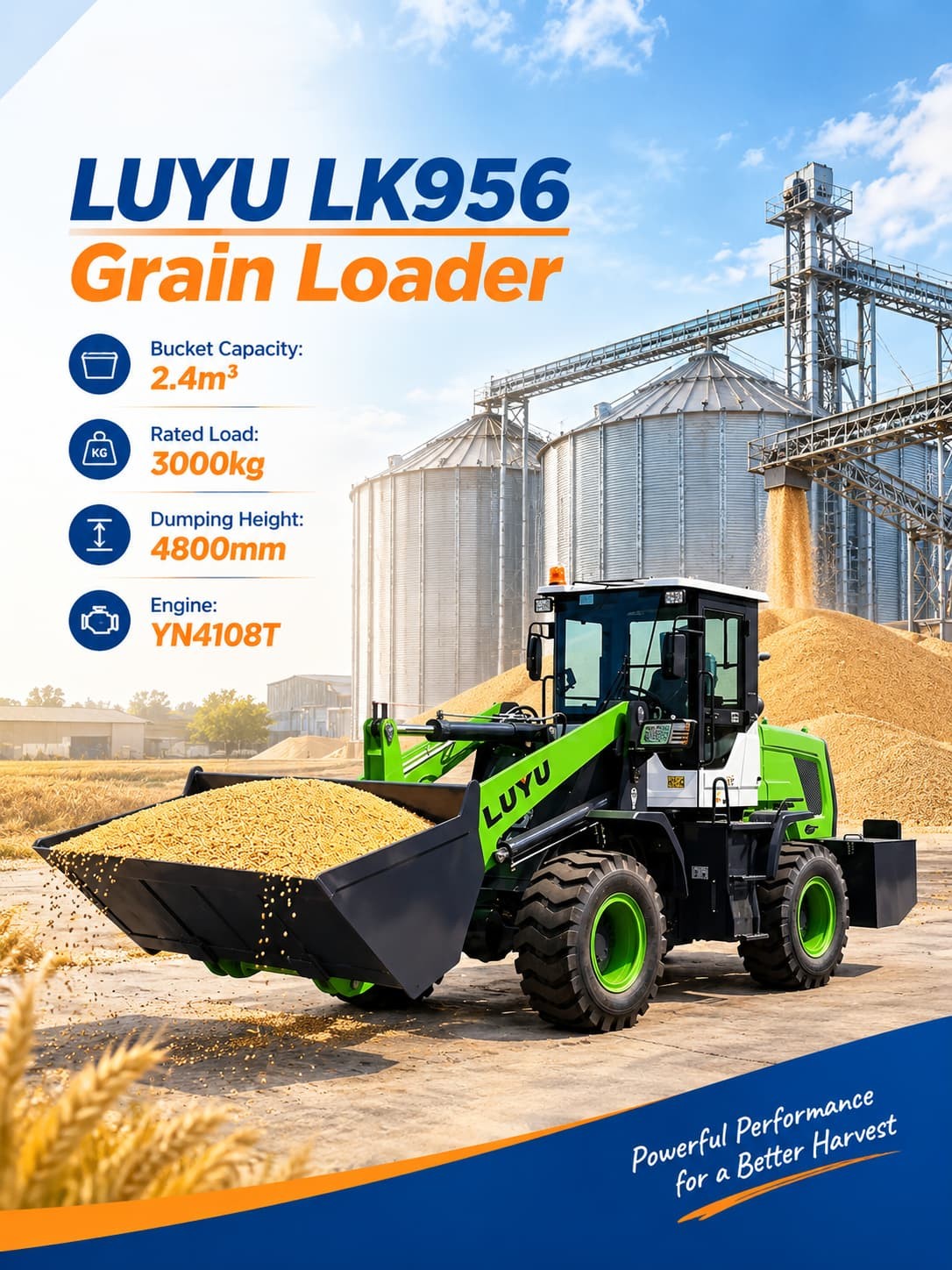
2. Main Parameters of the LUYU LK956 Grain Loader
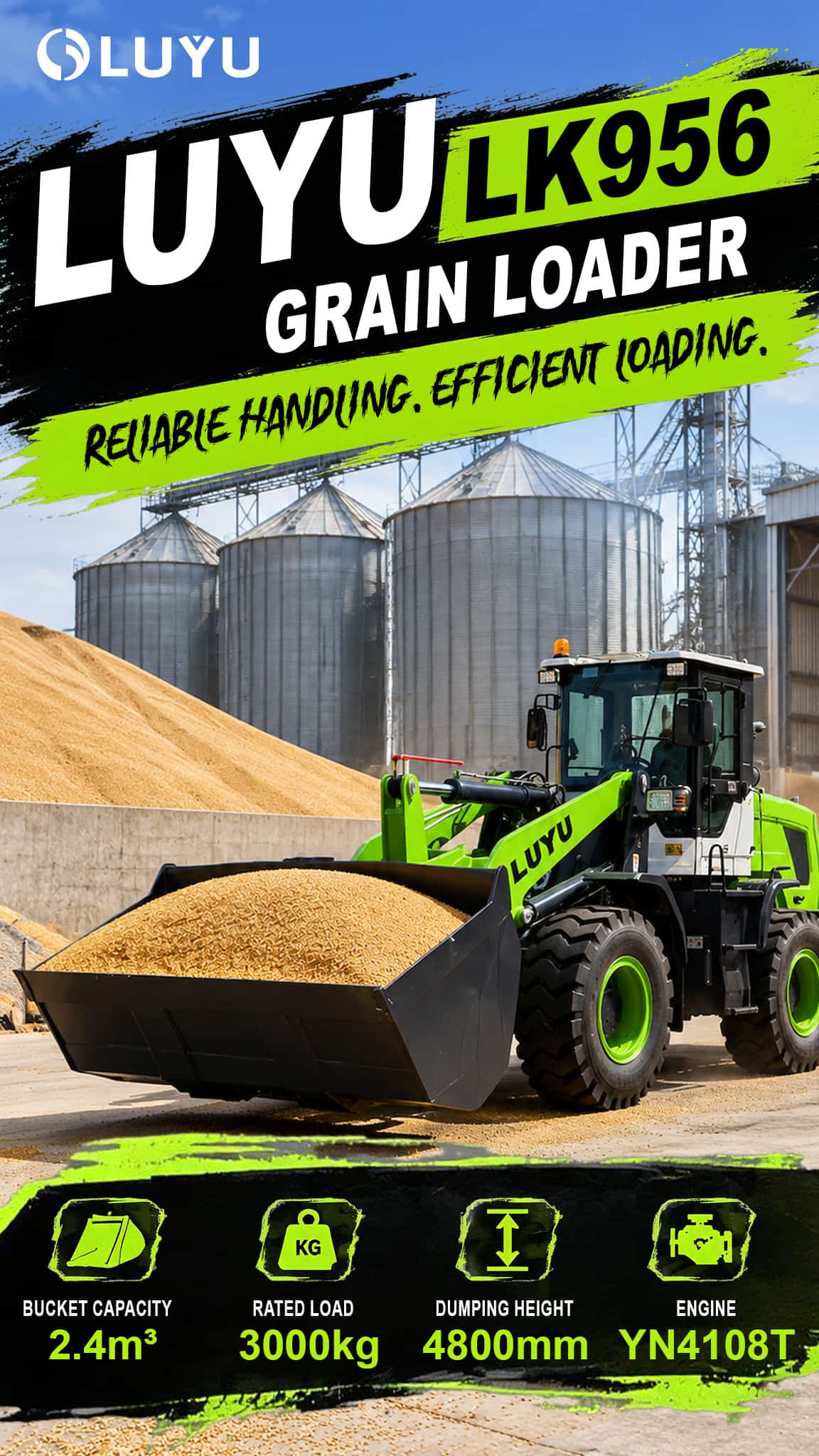
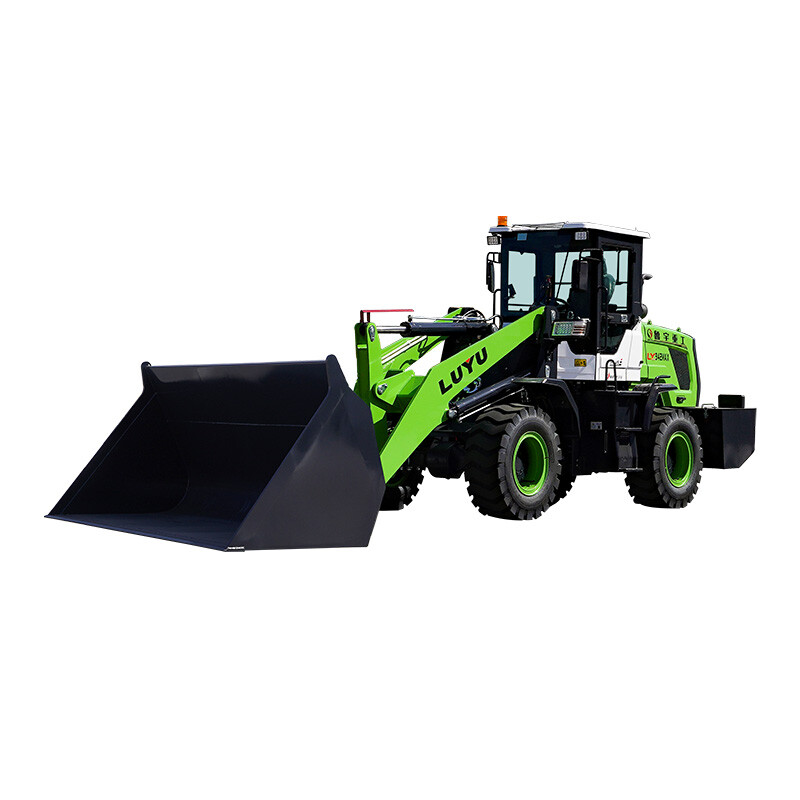
The LK956 is a wheel loader for grain handling: a 2.4 m³ bucket, a rated load of 3000 kg, and a published dump height of 4800 mm. For operators who have to discharge into a higher position, those figures are worth having on hand.
Bucket capacity is volume. Rated load is weight. Different things, and people mix them up all the time. How heavy a full bucket turns out to be comes down to the crop, how tightly the grain is packed, how you load it — same bucket, different weights. Work within the rated load and no more.
Dump height is about the destination, not the number. High-sided trailer, receiving point, whatever you discharge into — measure the vehicle and the actual discharge position before you order. The figure on the spec sheet says how far the machine reaches. Whether it suits the truck in front of it is a separate question.
3. Which Jobs a Grain Loader Actually Covers
Tidying grain piles and gathering loose grain
Grain doesn't stay where it was put. In a farm storage yard or at a grain pile, loose grain ends up spread across the ground, in lanes beside the truck, in the corners nobody sweeps. A loader pulls it back together — one pile, in one spot, ready for the next step instead of the one after. What you do about it depends on how the grain was stored and where the ground is soft.
Short-distance transfers inside the yard
A wheel loader can handle short-distance grain transfers between the storage and truck-loading areas. But carrying enough grain per trip is only part of the job. The machine also needs to move through the yard without difficulty. So, when choosing a loader, consider load capacity alongside travel distance, aisle width, and turning space.
Loading grain onto transport vehicles
Loading matters most during grain collection. Bucket capacity is one item on the list; dump height and dumping distance are the other two, and all of them have to match the vehicle in front of you. If the trailer rides high or the loading area is cramped, measure it before you order — the machine has to be able to finish the movement, not just reach the pile.
One thing to keep in mind: losses during grain handling also depend on how the machine is operated, the condition of the material, and site management. Choosing a suitable loader is one part of that — it does not mean a new machine solves every loss problem.
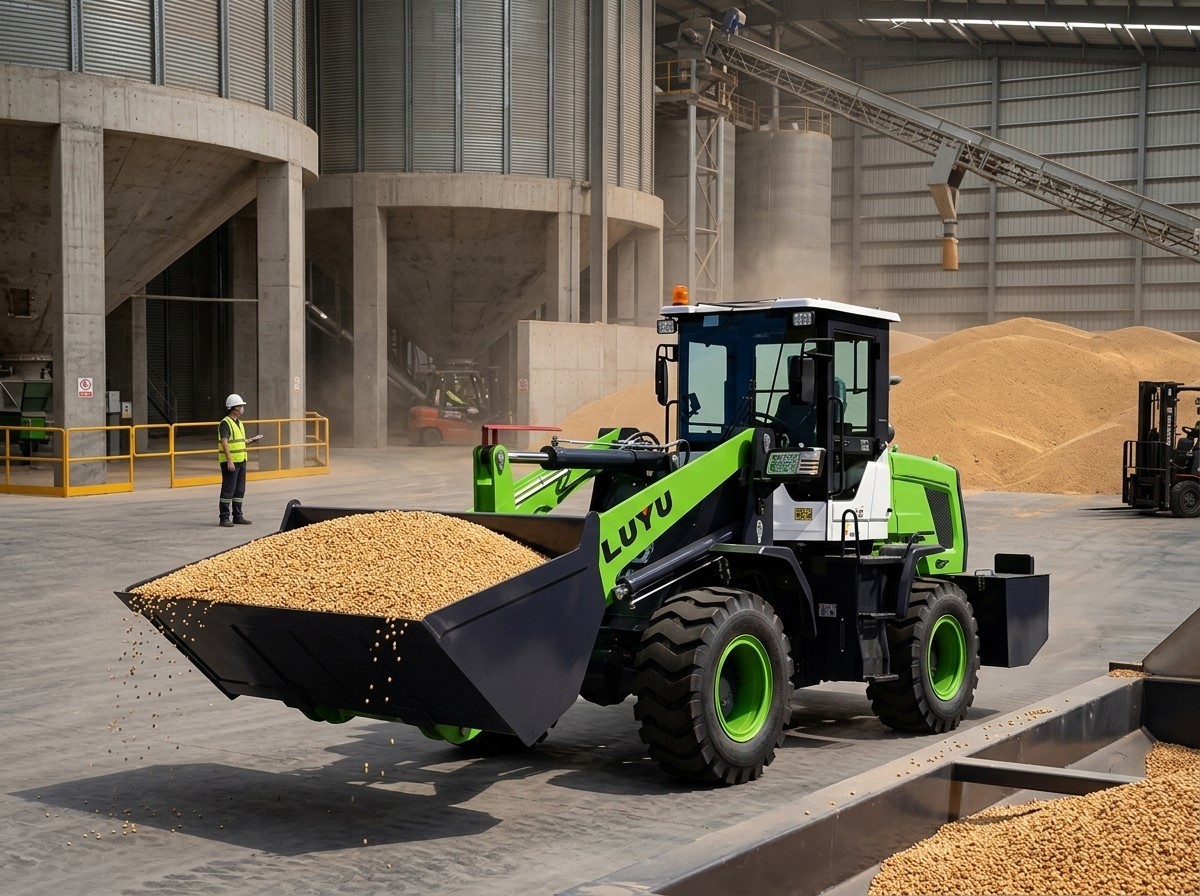
4. Which Parameters to Compare When Buying a Grain Loader
A grain loader selection comes down to three questions.
First, bucket capacity and rated load. If the work is bulk grain at volume, you need to know whether the machine’s rated load meets your requirement and to allow for the weight differences that come with material density. With a 3000 kg grain loader like the LK956, you also need to know the density of what you are handling before you assume a full bucket is a full load.
Second, dump height and dumping distance. If the machine mainly loads trucks, work from the bed height and loading position of the vehicles you actually use. Meeting the dump height does not mean every loading job goes through — the gap between vehicle and machine and the space on site still have to fit.
Third, overall dimensions and working environment. Aisle width, ground under the wheels, room to swing the machine around, somewhere to park it at the end of the shift — none of this is on the spec sheet, and all of it decides how the machine gets used every day. The LK956 measures 8255 × 2650 × 3180 mm, so walk the working area before you buy and check there is room to get in and room to work.
Sort that out first, and the comparison between models gets easier. Horsepower on a brochure does not answer it.
What matters is whether the machine fits the job in front of you — the numbers on the sheet only tell you what the machine can do, not whether it can do it here.
Conclusion
From managing grain piles to moving grain around the yard and loading trucks, each task has different demands. So rather than chasing bigger specifications, consider the material you're handling, your site conditions, and loading requirements. In the end, a machine that fits your operation matters more than impressive specifications.
If you're looking for a reliable grain-handling solution, explore the LUYU LK956 and see how its configuration matches your operation. Be sure to check the details against your actual working conditions before making a purchase.
For the full LK956 specification, visit the LUYU LK956 Grain Bucket Loader product page and ask LUYU for equipment selection advice for your specific working conditions.
 facebook
 twitter
 linkedin
 Grain Loader Bucket Capacity: A Guide to Choosing the Right SizeLooking for the right grain loader bucket capacity? Learn how to balance loader rated load, bulk density, warehouse space, and bucket shape. Explore Luyu's wheel loader grain bucket and grain warehouse loader solutions for efficient grain handling.
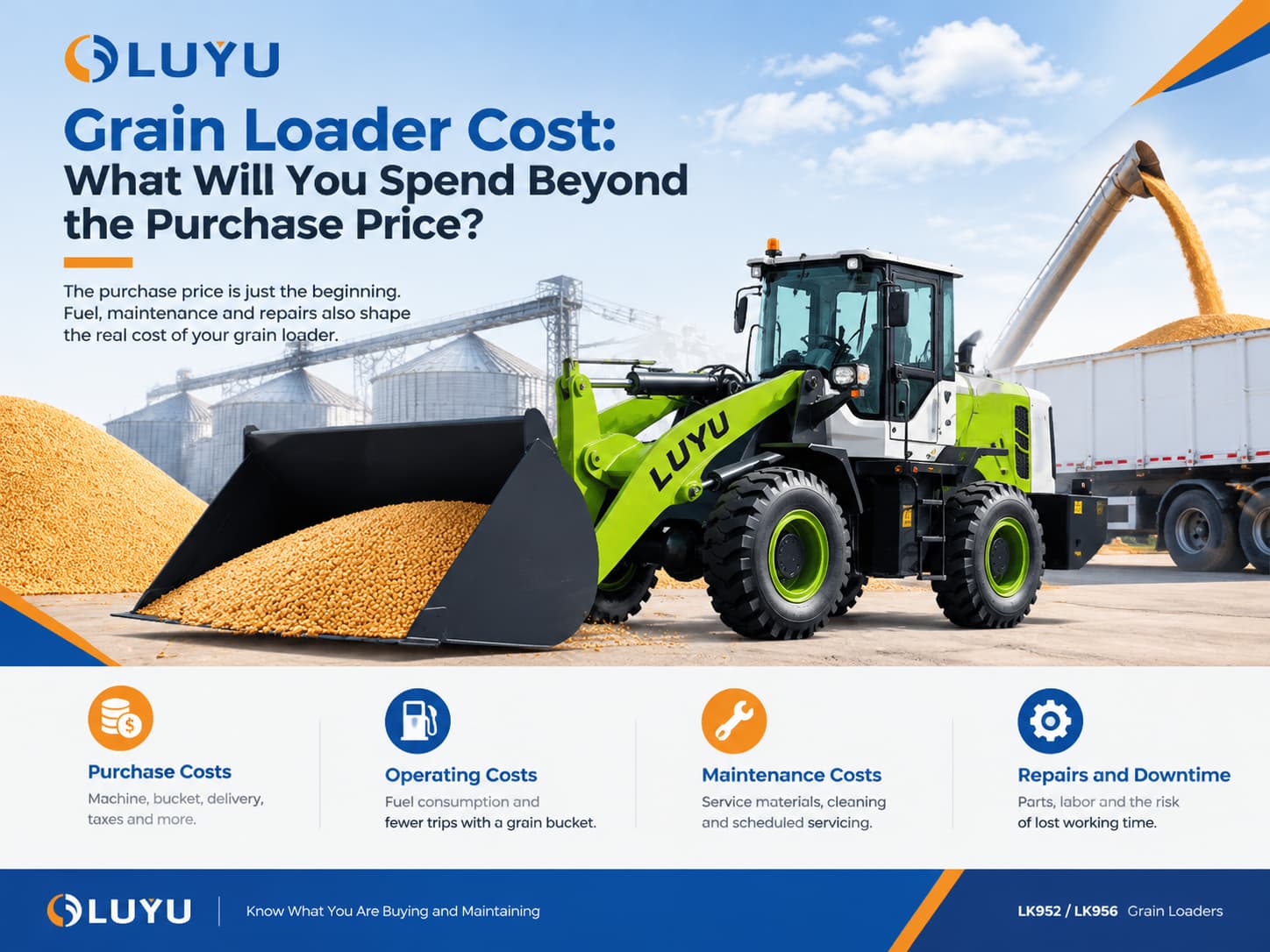
 Grain Loader Cost: What Will You Spend Beyond the Purchase Price?Looking beyond the quote? Learn how fuel, maintenance, and hidden fees impact total grain loader cost. Explore LUYU LK952 & LK956 models for efficient grain handling.
 Brazil Grain Loaders: A Selection Guide for Soybean Handling EquipmentChoosing a grain loader for soybean handling in Brazil? Compare bucket capacity, rated load, unloading height and machine dimensions to find the right fit for your grain storage site.
 Grain Warehouse Loader vs. Grain Conveyor: What's the Real Difference?Compare a grain loader and grain conveyor for bulk grain handling. Learn how mobility, bucket capacity, rated load and dump height affect equipment selection.
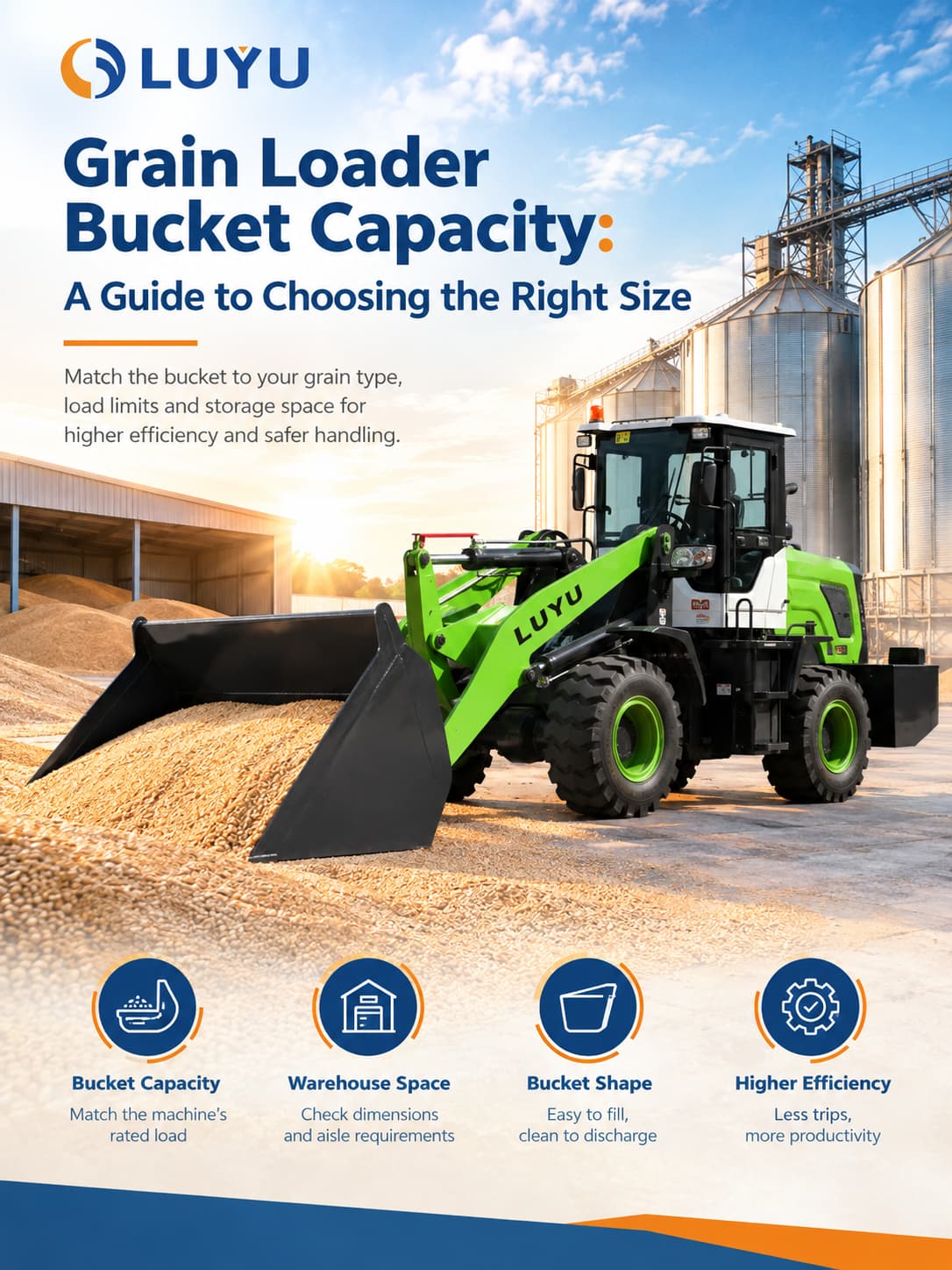
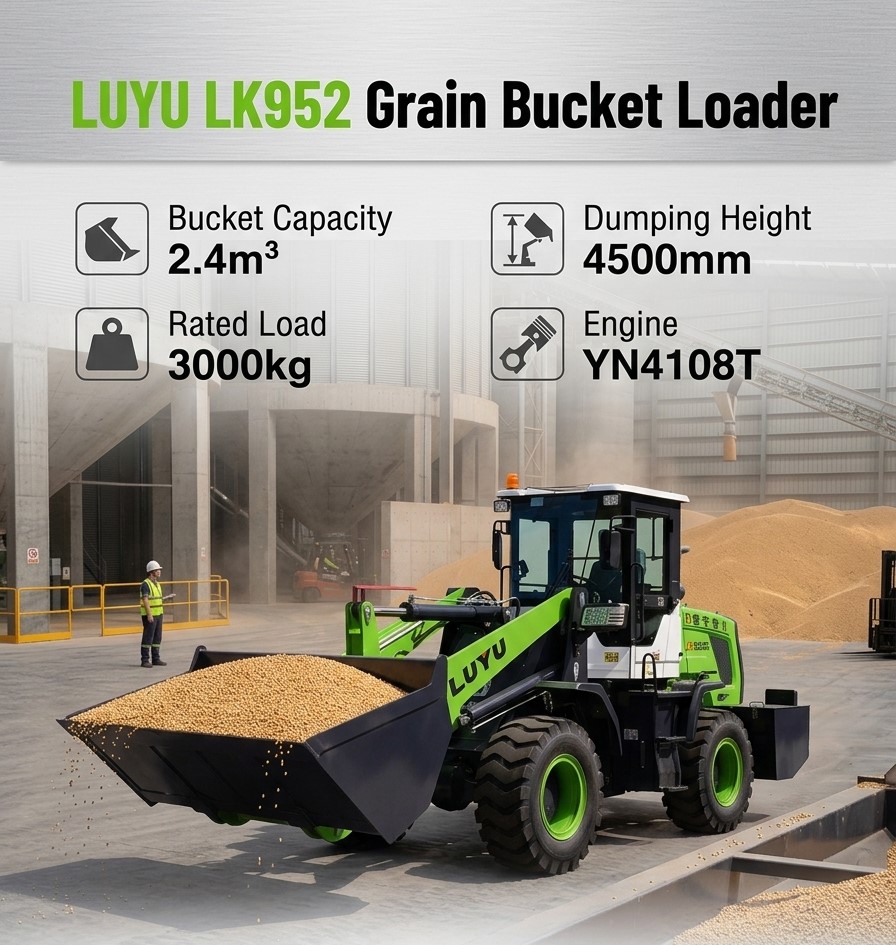
 LK952 Grain Bucket LoaderThe LUYU LK952 grain loader changes that. From bucket shape and load volume to operation and durability, every detail is optimized for grain handling. With this grain loader, your loading jobs will become easier, more efficient, and one less thing to worry about.
 LK956 Grain LoaderThe 956 Agricultural Farm Loader adopts some special design and functions to better adapt to the needs of grain loading, improve loading efficiency, protect the integrity of grain, and reduce the loss and waste of grain. Let's take a look at what upgrades the 956 Grain Bucket Loader can make.

Send Your Inquiry