






2026 LUYU LK952 Grain Loader: Built for Moving Loose Grain
Contents
Grain flows easily and spills readily during handling. When loading wheat, corn, or soybeans throughout the day, the right bucket can make a real difference. And two specifications are key to choosing the right setup: bucket capacity and dump height.
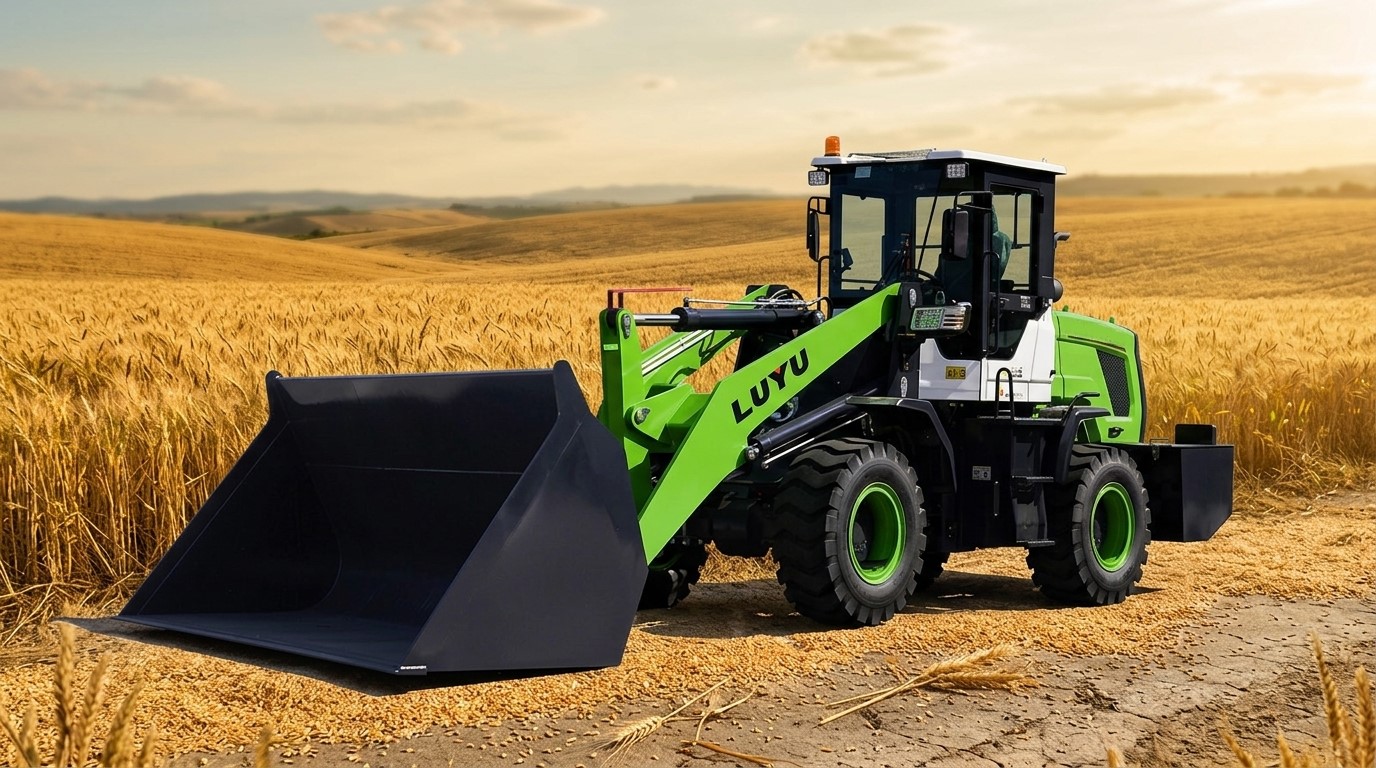
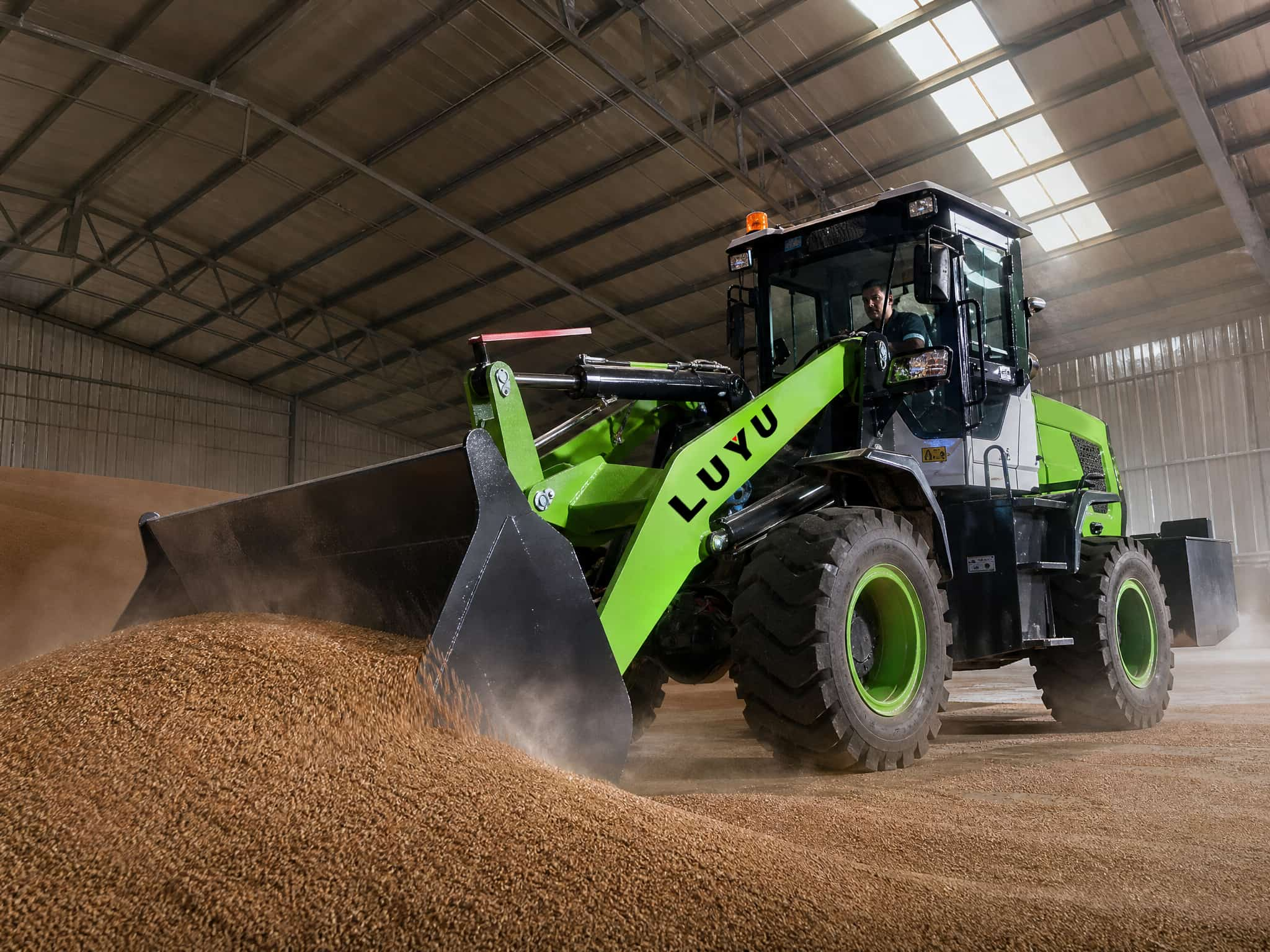
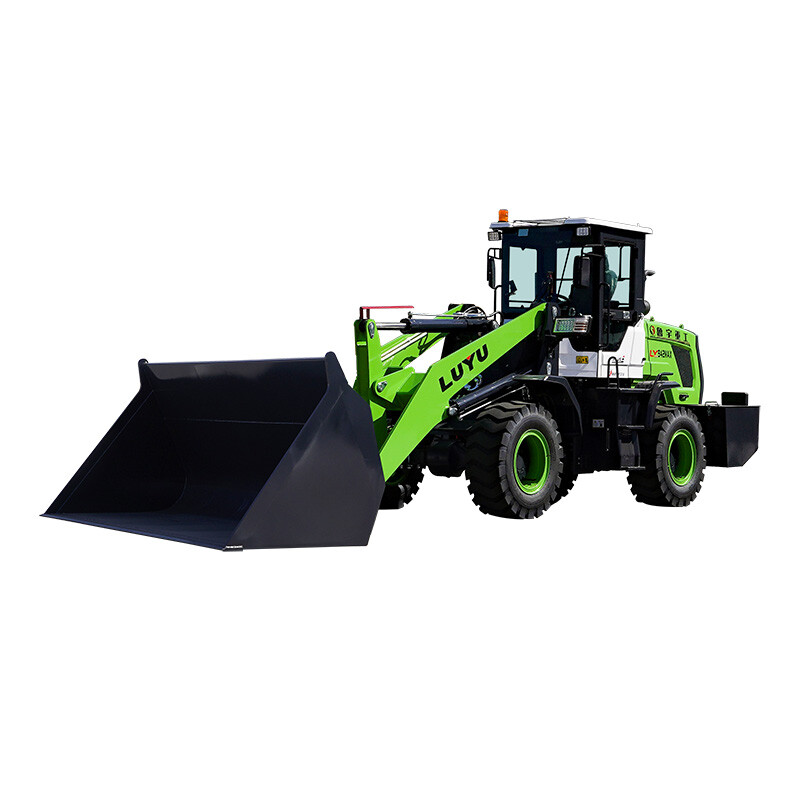
That's the whole reason the LUYU LK952 grain loader exists. From farm transfers to truck loading and processing plant operations. It’s built for bulk grain handling.
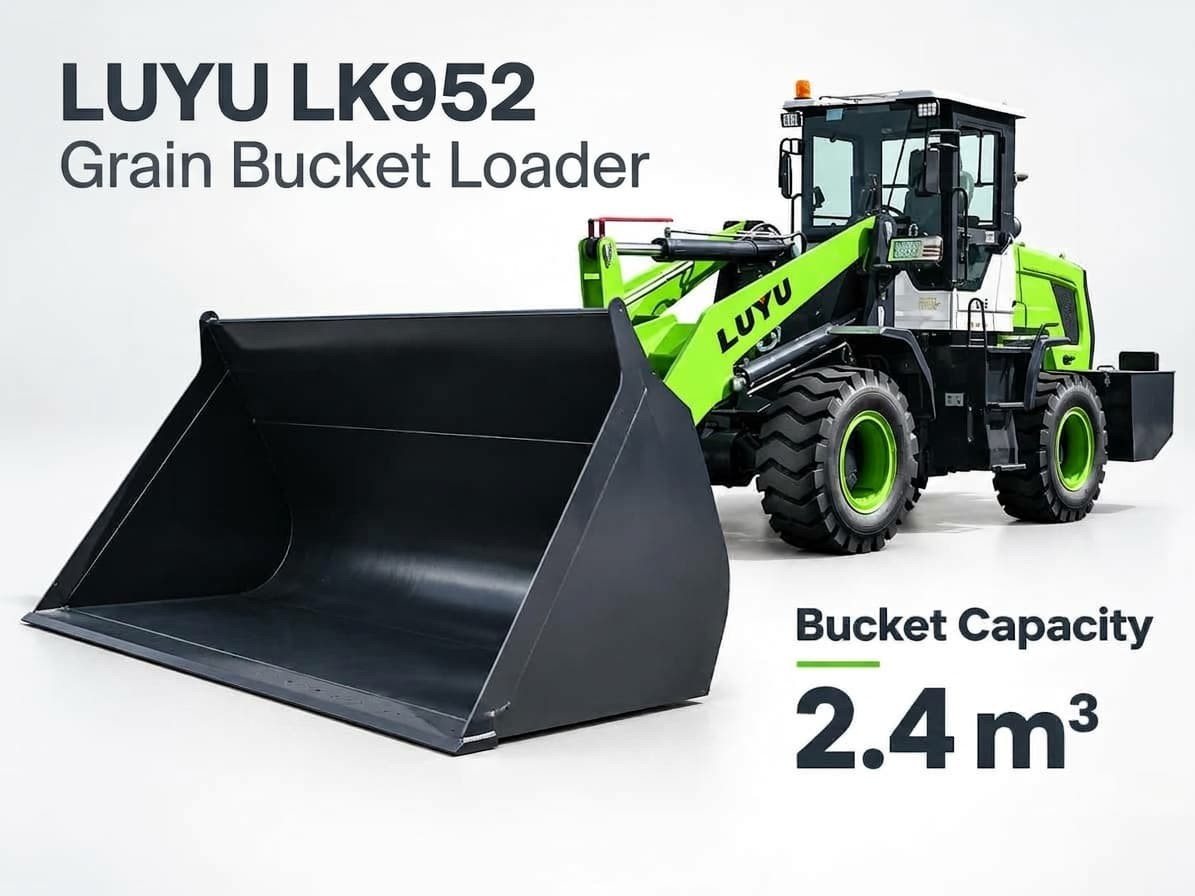
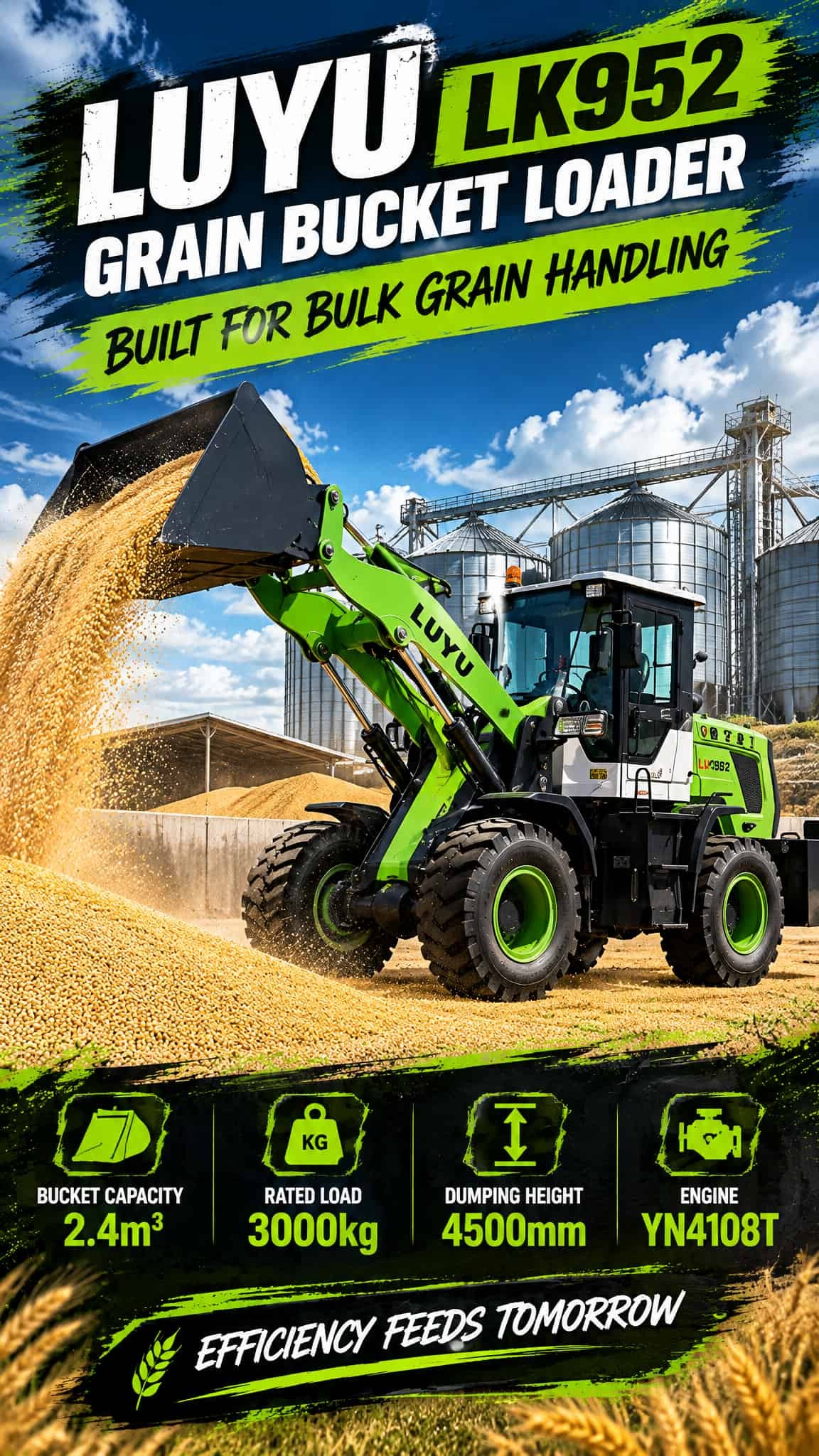
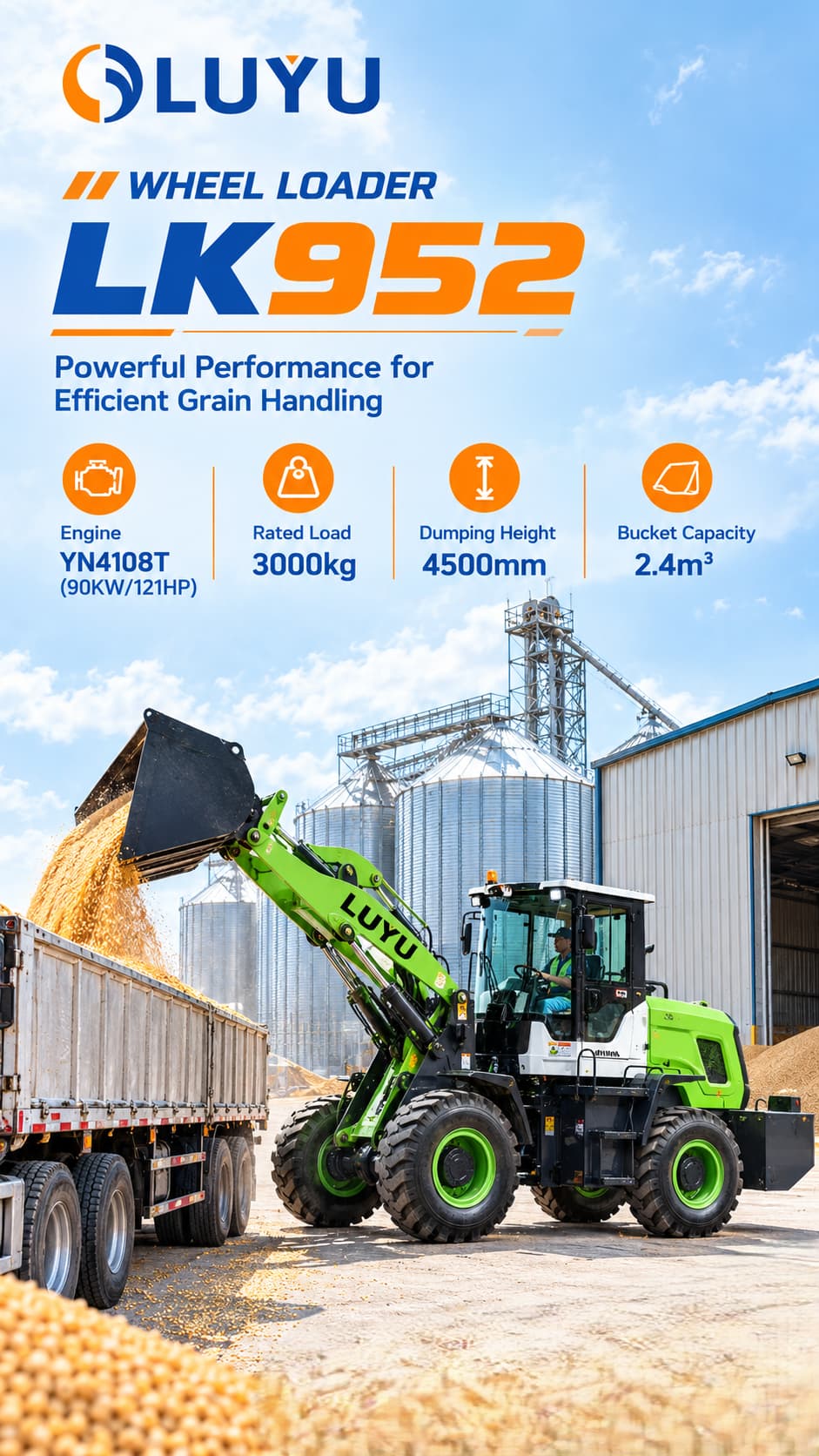
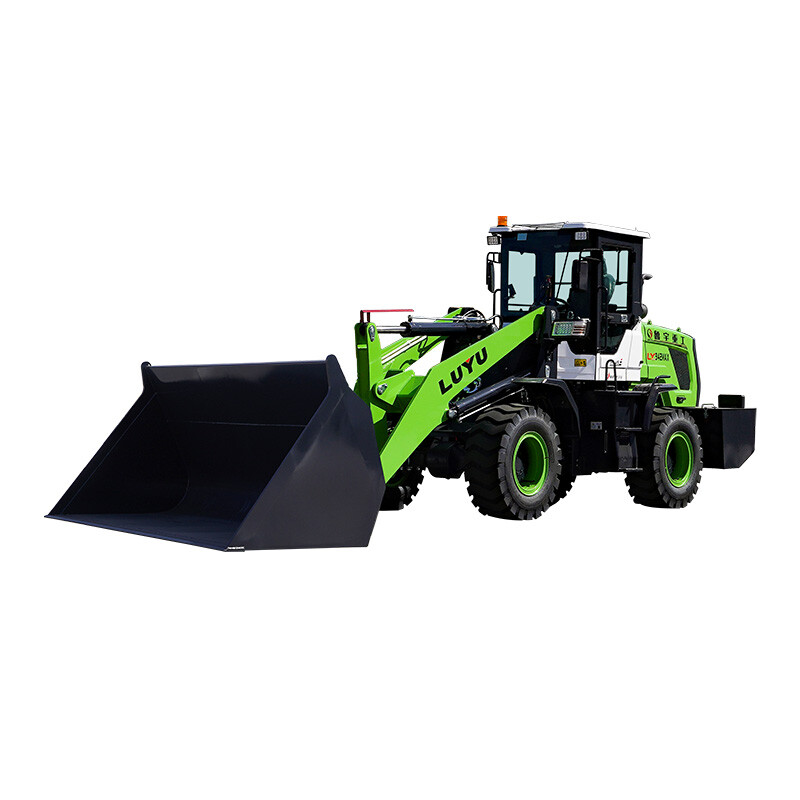
The LUYU LK952 features a 2.4 m³ grain bucket rated at 3,000 kg and a maximum dump height of 4,500 mm. We understand, certainly, that whether these specifications fit your operation depends on load size, truck height, and available turning space. So, follow this guidance to check them against your own conditions before you commit.
LUYU LK952 Grain Loader — Key Specifications
Looking at the spec sheet tells you a lot. It also tells you what still needs checking.
What Makes the LK952 Work for Grain Handling?
A 2.4 m³ bucket sized for loose grain
Sand and crushed stone are dense. Grain isn't. Same bucket, very different result — which is why bucket volume is one of the first things worth arguing about when you pick a machine for grain.
The LK952 comes with a 2.4 m³ bucket. That figure gives you a starting point for estimating how much you move per pass, and whether one machine can keep up with the daily repetitions your workflow demands.
One caveat: the weight in the bucket isn't the number on the sheet. Crop type, moisture content, and bulk density all change it. Calculate the real load weight against these three variables, and stay inside the rated load.
4500 mm dump height for truck loading
When grain has to land in a truck bed, a hopper or another machine's intake, dump height decides whether the job goes smoothly or turns into a daily fight.
The LK952 has a rated dump height of 4500 mm. That's enough to judge, at a glance, whether your loading points are within reach.
Measure before you buy, not after. The receiving point, the dump distance, the clearance you actually have on site — none of that lives on a spec sheet. And 4500 mm on its own says very little. A machine can hit that number and still miss the truck.
Matching the machine to your working day
Grain handling means a lot of scooping, short shuttle runs, and repositioning around the pile. That makes overall dimensions, wheelbase, and ground clearance worth a close look — especially if you're buying a grain warehouse loader for indoor or yard use.
Also think about ground conditions, turning space, the route material travels, and where you'll be doing daily checks. Match the machine to the layout before it arrives, not after.
Where Does the LK952 Fit?
Grain storage and warehouse yards
Inside a storage facility, a grain loader works the pile and whatever comes next — a truck, a hopper, a conveyor. Same cycle all shift. Bucket capacity and dump height set how much you move per pass, so those two numbers decide your throughput. Get them wrong and no amount of engine power saves the shift.
Farms and post-harvey transfer
After harvest, grain sits where it lands — a temporary collection area, waiting on trucks or a spot in the bin. A lot of buyers run a grain warehouse loader straight off the combine. Line the LK952's rated load, bucket volume, and overall dimensions up against your own farm workflow. The answer either shows up fast, or it doesn't.
Grain processing plants
Plants move raw material from storage to intake points all shift long. Layout, material type, and the height and position of receiving equipment all matter. Judge the machine against those three things, not against a brochure.
Choosing a Loader for Grain Work
Four questions answer most of it:
What are you moving? Grain variety and moisture content change bulk density — and bulk density decides how much weight actually lands in the bucket.
How much per pass? Compare bucket volume against your target output, then check it against the rated load.
How high do you need to dump? Measure the truck, hopper or intake. Don't judge from a single height figure.
How much space do you have? Check overall dimensions, turning room, access routes, and ground conditions.
Work through those four, and you'll know whether the LK952 fits.
FAQ
Does the LK952 suit different grain types?
It depends on the crop, its bulk density, moisture content, and your loading requirements. Check the bucket volume against real load weights for your material before you decide.
Grain bucket loader or standard wheel loader — which one?
Start with what you actually move. Loose grain and nothing else? Then a dedicated grain bucket loader is the right fit. Throw soil, sand, and gravel into the same day, though, and the bucket choice follows the heaviest share of your work.
How do I work out the right configuration?
Send the LUYU team your crop types, loading positions, site space and daily volume. They'll walk through the fit and the options with you.
Conclusion
Looking for grain handling equipment for a farm, warehouse, or processing plant? Get in touch with LUYU, and we'll walk you through the LK952's specifications and whether they match your operation.
As a grain loader manufacturer, we have our own production line. Tell us about your application and requirements, and we'll send product literature and a grain bucket loader for sale quote for the exact setup you need.
 facebook
 twitter
 linkedin
 Grain Loader Specifications: What to Check Before You BuyCompare grain loader specifications before you buy. Learn how bucket capacity, dump height, turning space and cleaning access affect grain handling.
 Grain Bucket vs Standard Bucket: How to Choose for Bulk Grain LoadingCompare grain buckets and standard buckets for bulk grain loading. Learn how bucket volume, grain density, dump height and loader capacity affect equipment selection.
 Wheel Loader vs Tractor with Front End Loader: Which Fits Livestock Farms Better?Compare a wheel loader vs tractor with front end loader for livestock farms. Learn the differences in loading, bale handling, manure cleanup and daily farm work.
 The 140th Canton Fair Is Underway: LUYU Booth Draws Strong Visitor InterestThe 140th Canton Fair is underway at the China Import and Export Fair Complex in Guangzhou, where LUYU is meeting customers and dealers from China and overseas.
 LK956 Grain LoaderThe 956 Agricultural Farm Loader adopts some special design and functions to better adapt to the needs of grain loading, improve loading efficiency, protect the integrity of grain, and reduce the loss and waste of grain. Let's take a look at what upgrades the 956 Grain Bucket Loader can make.
 LK952 Grain Bucket LoaderThe LUYU LK952 grain loader changes that. From bucket shape and load volume to operation and durability, every detail is optimized for grain handling. With this grain loader, your loading jobs will become easier, more efficient, and one less thing to worry about.

Send Your Inquiry