






NEWS
Grain Bucket vs Standard Bucket: How to Choose for Bulk Grain Loading
Contents
1. Grain bucket vs standard bucket: what actually changes
2. Why bucket volume matters in grain loading
3. When a grain bucket is worth it
4. What else to check before you buy
In grain storage, processing, and agricultural transfer, loaders spend their days moving wheat, corn, soybeans, and other bulk grain. Unlike heavy, compact sand and gravel, grain is bulky. The same weight takes up far more space, so a bucket that is too small means extra passes — and extra passes quietly slow the whole loading cycle.
Capacity is only half the answer. Once a grain loader is moving wheat or corn, the bucket matters just as much as the machine — and in tight lanes it matters more. So what does a grain bucket actually give you that a standard one doesn't?
1. Grain bucket vs standard bucket: what actually changes
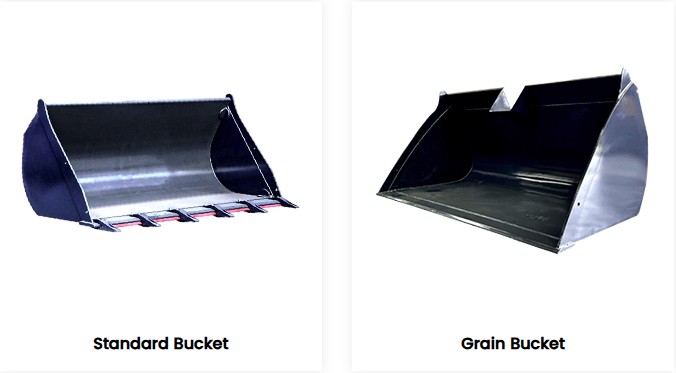
A standard bucket has no opinion about material. Gravel, soil, brick — it takes all of it. A grain bucket is designed around one thing only: loose grain, and how much of it you want to lift in a single pass. Everything else follows from that.
Volume is the part that bites. With a small standard bucket, the loader can have payload to spare and still be unable to take more material — the bucket is simply full. Nobody argues with that.
This is where a wheel loader grain bucket separates itself from a general-purpose one. The extra volume is designed in, not added on afterwards.
A grain bucket does offer greater capacity for bulk grain, so the loader can move more material in each pass.
However, it may not suit every job. If the loader also handles gravel, soil, or other materials regularly, the choice should reflect its main workload.
2. Why bucket volume matters in grain loading
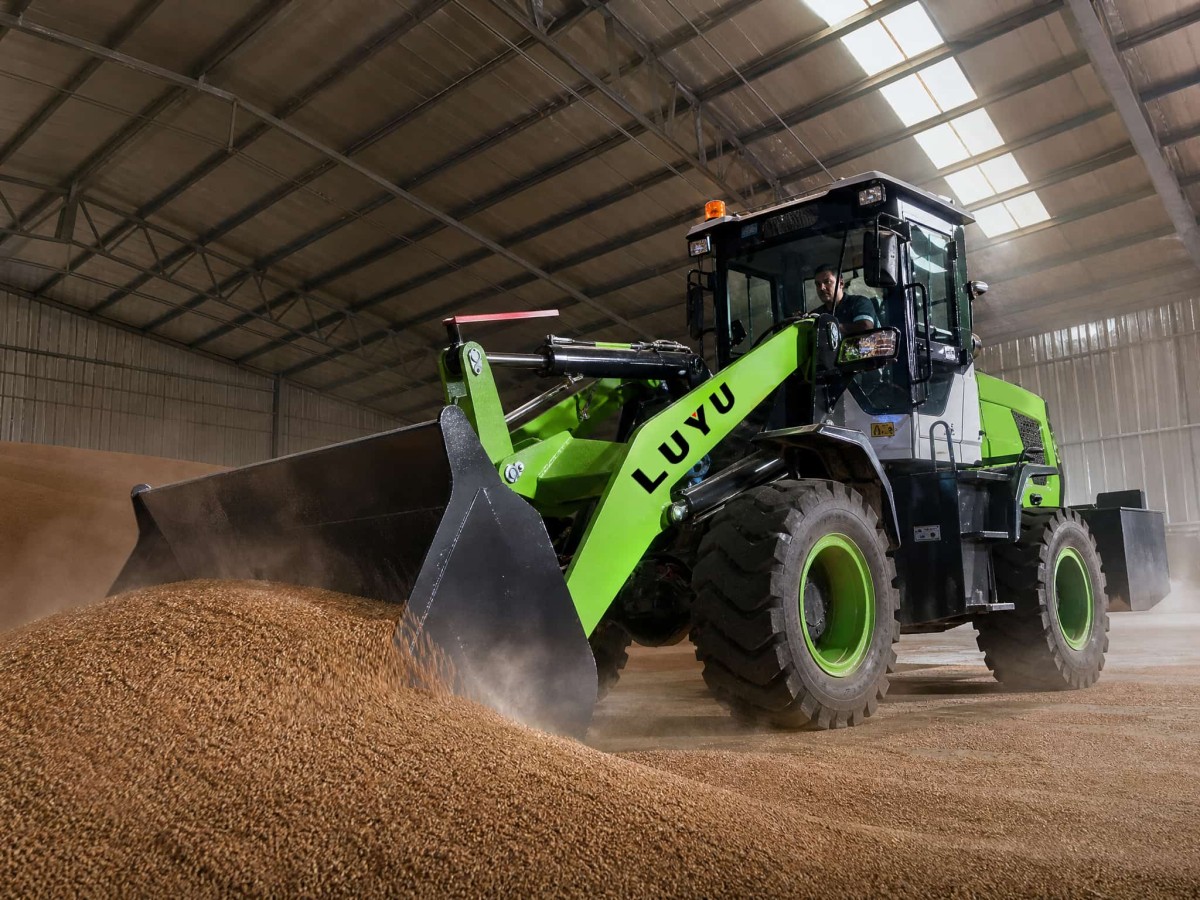
Watch a truck being loaded with wheat and the reason becomes obvious. Half a bucket per pass means double the passes, and nobody watching the loading point is happy about that. Inside a warehouse, the same thing happens, except there you are also losing floor space to every trip.
Tonnage tells you part of the story. Volume tells you the rest.
Bigger bucket, heavier load — not quite. Grain density and moisture affect load weight, which must stay within the loader's capacity and stability limits.
Anyone doing continuous truck loading, short transfers, or bin tidying will notice the difference quickly. Get the volume right, and the extra passes disappear.
3. When a grain bucket is worth it
A dedicated grain loader bucket suits bulk grain handling best, especially where loading and transfer are frequent. Two questions decide it: how much grain moves in a shift, and how tight the lanes are.
A grain warehouse loader earns its keep in narrow aisles and confined doorways. When volume per pass is the priority, a larger wheel loader grain bucket does more work per cycle.
· Truck loading— pulling grain off a pile into trailers. Match the machine to trailer height and to where the bucket can discharge.
· Grain warehouse handling — short runs between unloading, storage, and loading areas. Volume matters, but so do tight doors, low beams, and turning space.
· Processing plants — Grain intake, stockpile handling, and transfers. Daily throughput determines whether a dedicated grain bucket is worthwhile.
If grain is the main event, start with the grain warehouse loader bucket. If the machine wears several hats, weigh versatility against grain volume. Honestly, not hopefully.
4. What else to check before you buy
Volume is one line on the spec sheet, not the whole sheet.
1) Volume vs rated load.
A larger bucket gives you room, but the weight still depends on grain density and the loader's rated capacity. Check both numbers together, every time.
2) Dump height and the trailer.
If you load trucks, confirm the dump height clears what you are loading into. For taller trailers, look at dump clearance and the working room around the vehicle.
3) Space and routes.
Gates, lanes, and stacking areas decide whether the machine can work at all. Bucket spec is only half of it — check overall dimensions and turning radius too.
4) Machine-to-bucket fit.
Confirm the mounting, payload rating, and stability. Volume alone is not a good reason to bolt a bigger bucket on.
Conclusion
Getting the bucket right removes wasted passes on everyday bulk grain work. Match the bucket to the material, the trailer, the space, and the machine's own limits. Nothing else matters quite as much.
Looking for a wheel loader set up for grain handling? Contact LUYU for grain loader configurations, from compact grain warehouse wheel loader to high-volume wheel loader grain bucket. We will help you match the machine to the job, not the other way around.
Share to :




Tag :
Inquiry
Our manager will contact you within 30 minutes of working hours.
Related products

Send Your Inquiry