






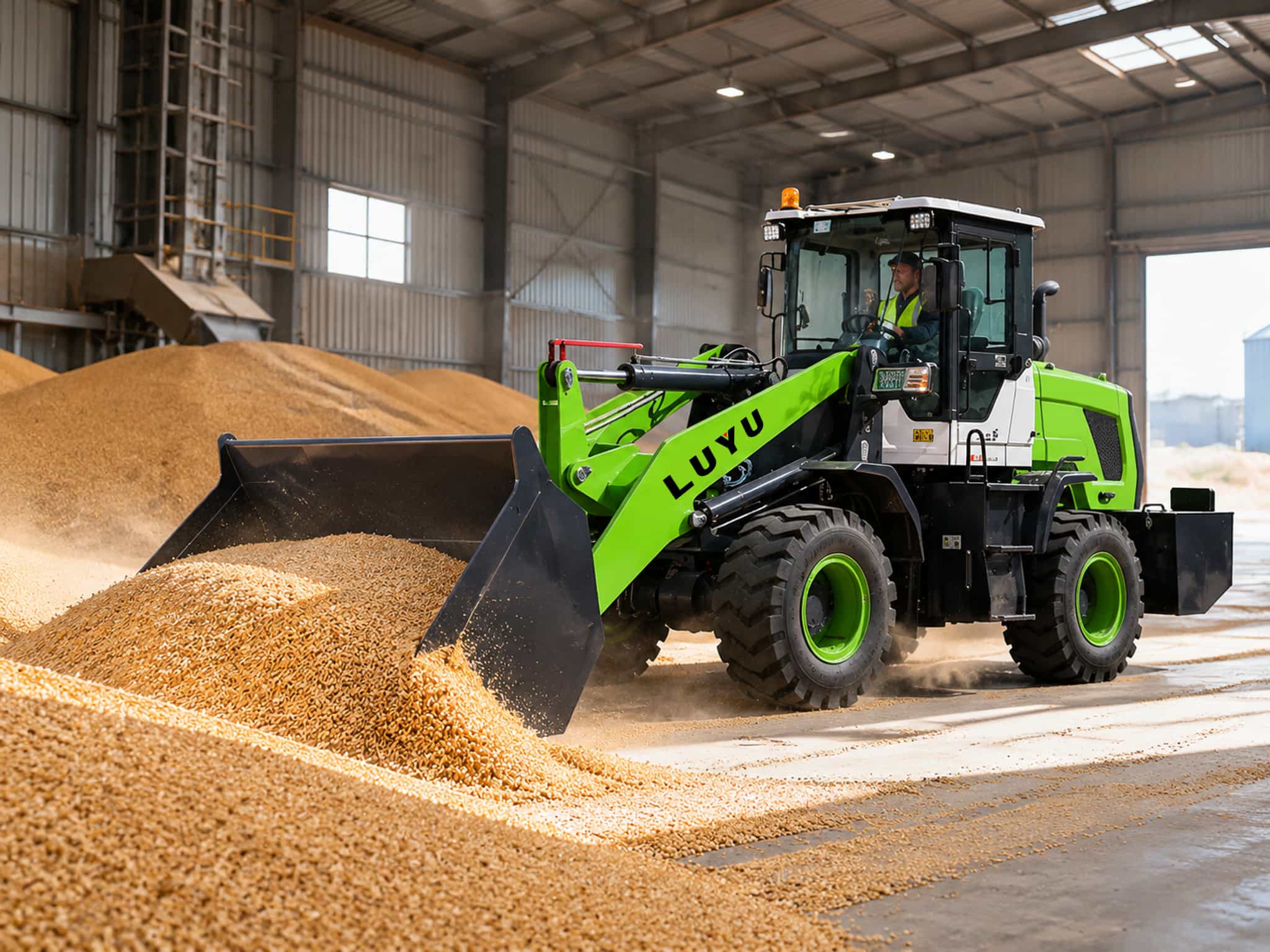
How to Choose a Grain Wheel Loader: From Handling Conditions to Machine Configuration
Wheel loaders handle grain transfer, stockpile management, and loading throughout grain storage operations. From receiving to dispatch, they move bulk grain between different work areas.
Grain's low density means more storage and handling space is needed for the same weight. Dust from loading, unloading, and conveying also influences long-term operating conditions.
Choosing a suitable grain wheel loader therefore involves more than basic handling capacity. Its working equipment, cab environment, and overall configuration should be considered before making a choice. To help you assess these factors, this guide looks at operating conditions, tonnage, and configuration features.
Working Conditions in Grain Storage and Equipment Requirements
How Grain Characteristics Affect Loading
For the same weight, grain occupies more space than denser materials. A standard bucket may therefore be full before the grain wheel load reaches the loader's rated capacity.
The limited volume per load means more loading cycles and return trips. As a result, large quantities of grain take longer to move.
How Dust Affects Machine Protection
Dust is unavoidable as grain is received, conveyed, loaded, unloaded, and stored.
Inside the cab, it can worsen working conditions and harm the operator's health. Furthermore, deposits around the radiator and engine compartment may restrict cooling airflow over time. This will bring more checks and cleaning tasks.
How Storage Layout Affects Maneuverability
Loaders frequently move around grain piles and vehicles, but the existing warehouse layout often limits the space they need.
When space is tight, maneuvering becomes harder, and the flow of grain transfer and loading may be interrupted.
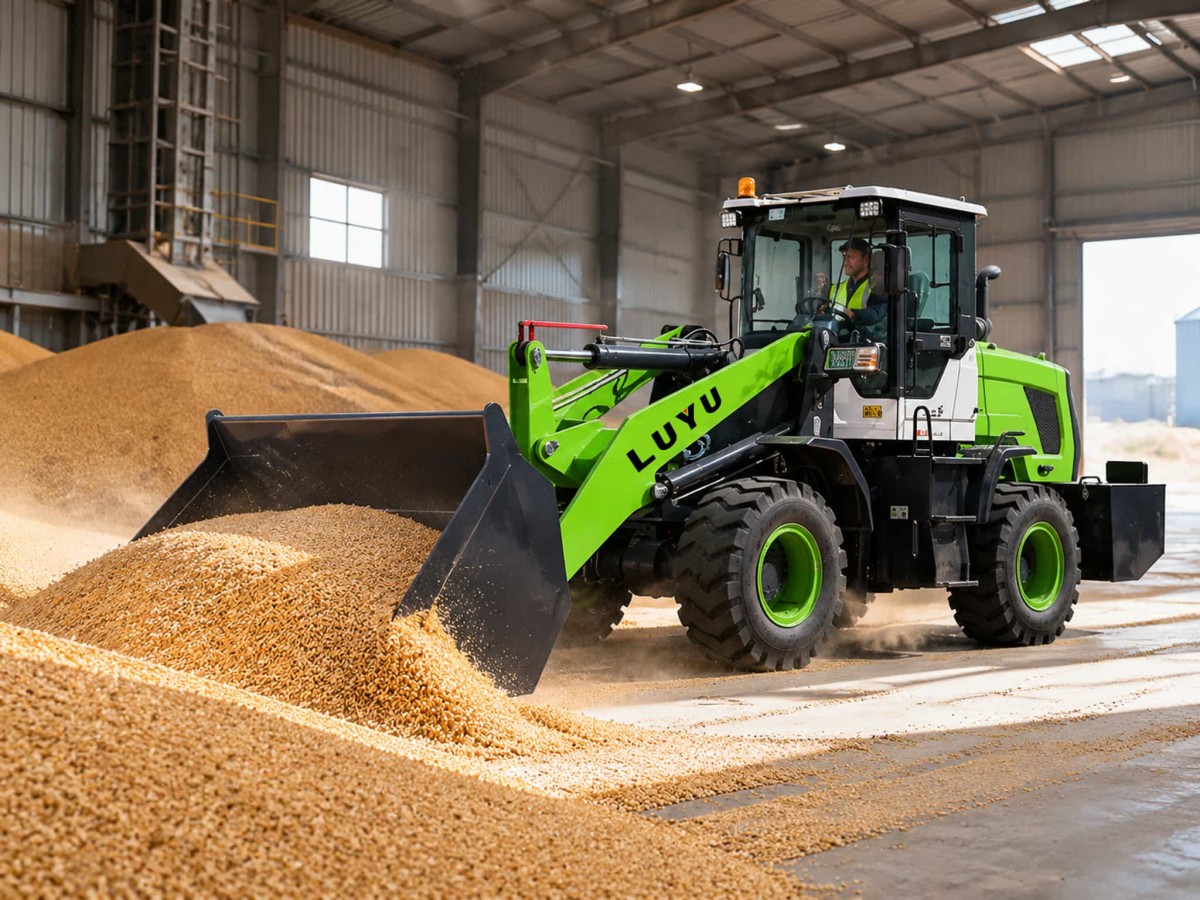
Main Applications of Wheel Loaders in Grain Storage
Daily loader work centers on loading, grain transfer, and work inside the storage area.
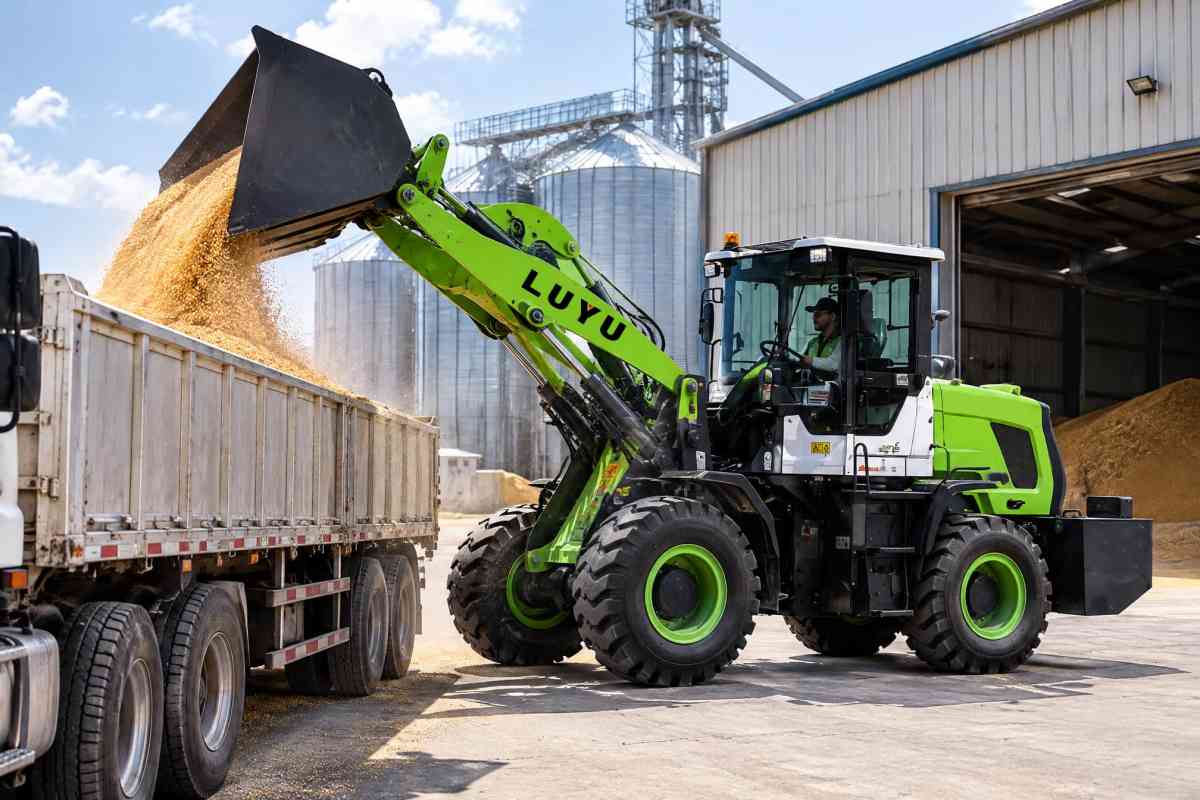
Loading is the most common task. The loader scoops bulk grain from stockpiles and tips it into trucks, hoppers, or other transport equipment.
Short-distance transfer involves carrying grain between unloading areas, warehouses, storage yards and loading points.
During grain relocation, material is scooped out of one storage bay and transferred to another bay or stockpile area.
Warehouse clean-out takes place after dispatch. The loader gathers and removes grain left on floors, near walls, and at the base of stockpiles.
This shows that grain wheel loaders play an important role in day-to-day handling, as they support these stages of grain storage.
How to Choose Between 2 Ton, 3 Ton, and 5 Ton Grain Wheel Loaders
The right tonnage depends on your workload and site conditions. Then, how do you make the right decision between LUYU's 2-, 3-, and 5-tonne models? The following criteria offer a guide.
2 Ton Grain Wheel Loader
A 2-tonne loader suits low-volume handling where maneuverability is important. Examples include:
Farm grain stores
Small grain storage facilities
Small grain processing sites
This class is sufficient for light grain handling work.
3 Ton Grain Wheel Loader
A 3-tonne loader suits environments that require both handling capacity and maneuverability. Applications include:
Grain collection and storage businesses
Medium-sized grain storage facilities
Routine grain transfers
This class offers greater handling capability for loading, grain relocation, and stockpile management.
5 Ton Grain Wheel Loader
A 5-tonne loader is better suited to continuous, high-volume grain transfer, such as:
Large grain collection and storage centers
Grain processing businesses
Areas with frequent loading and unloading
Its higher capacity can support larger-volume grain transfer with ease.
Why Choose LUYU Grain Wheel Loaders?
LUYU offers bucket options and machine configurations for bulk grain loading, dusty conditions, high-level discharge, and frequent transfers.
Dedicated Grain Bucket
Carries a greater volume of grain per load, reducing return trips during loading, internal transfer, and relocation between storage bays.
Optional High-dump Bucket
Raises the discharge position and extends the range of grain-loading applications the wheel loader can handle.
Sealed Cab
Limits dust entry into the operator’s area and improves working conditions during sustained work inside grain storage buildings.
Noise Reduction Design
Reduces the noise caused by the engine and disturbances during machine operation in the cab.
Wear-resistant Tires
Handle different ground conditions and offer a longer service life in everyday use.
Side-Opening Rear Hood
Gives operators more direct access to the engine and cooling components for routine checks, dust removal, and maintenance.
Bottom Line
Grain storage needs more than a general-purpose loader fitted with a different bucket. The whole machine must suit the working conditions. For this reason, LUYU focuses its design improvements on loading and unloading performance, operator comfort, and ease of maintenance to better meet long-term operating needs. View LUYU Wheel Loaders
 facebook
 twitter
 linkedin
 Benefits of the Grain Bucket LoaderThe perfect tool for farmers and agricultural workers looking for an efficient, powerful and durable solution for loading and transporting grain. This 500 word product description will highlight all the key features and benefits of the Grain Bucket Loader and how to use this piece of agricultural equipment.
 Meet LUYU at Canton Fair 2026 – Explore Quality Machinery SolutionsMeet LUYU Machinery at Canton Fair 2026 in Guangzhou, China. Explore our wheel loaders, rough-terrain forklifts and mini excavators from October 15 to 19, 2026.
 China's Loader Exports Expand Globally in 2026, with Overseas Demand Reaching New HeightsChina's wheel loader exports surged in 2026, with over 100,000 units shipped in the first half. Explore global market growth, key destinations, export trends and pricing challenges facing Chinese construction equipment manufacturers.
 LUYU Delivers 6 Units of Wheel Loaders to AustraliaLUYU has successfully completed the production, inspection, and delivery of 6 units of LY936 1.8 ton wheel loaders to Australia. After comprehensive factory testing and quality inspections, these compact wheel loaders are ready to support customers in agricultural operations, construction projects, landscaping, and various material handling tasks.
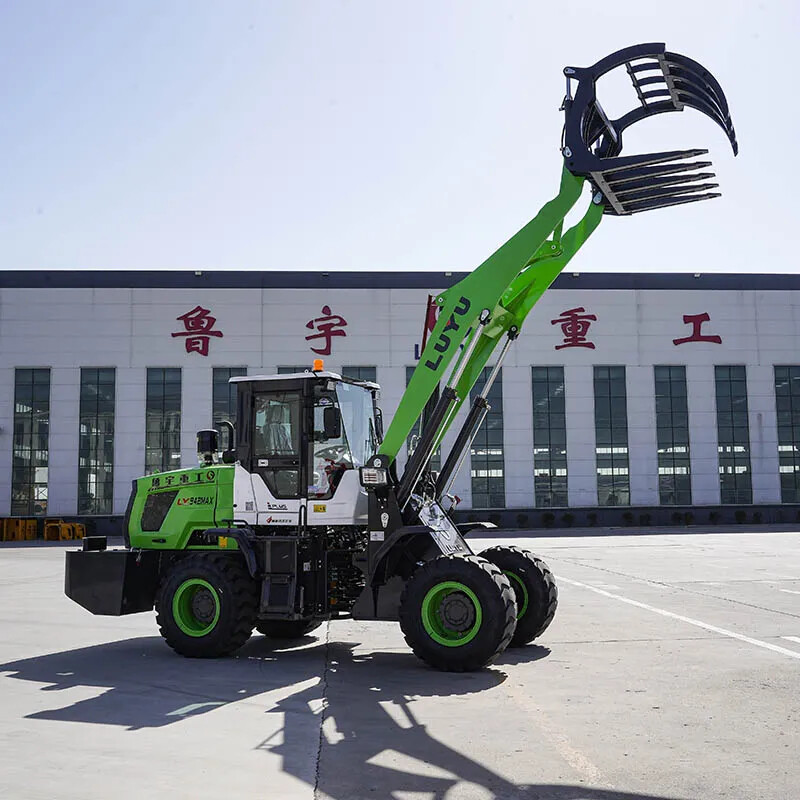

 LK956 Grain LoaderThe 956 Agricultural Farm Loader adopts some special design and functions to better adapt to the needs of grain loading, improve loading efficiency, protect the integrity of grain, and reduce the loss and waste of grain. Let's take a look at what upgrades the 956 Grain Bucket Loader can make.
 LK952 Grain Bucket LoaderThe LUYU LK952 grain loader changes that. From bucket shape and load volume to operation and durability, every detail is optimized for grain handling. With this grain loader, your loading jobs will become easier, more efficient, and one less thing to worry about.

Send Your Inquiry