






Tractor Applications in Brazilian Cotton Fields: From Harvest Support to Post-Harvest Field Management
Content
Brazil is one of the world's major cotton-producing countries. Industry data for the 2025/26 season puts production at about 4.144 million tons across 1.996 million hectares. Large-scale, concentrated production makes agricultural machinery essential to Brazil's cotton industry.
Tractors play a central role among these machines. During planting, they pull rotary tillers, disc plows, seeders, and others for tillage and sowing. Their work continues after the harvest season begins.
So where can cotton farm tractors improve harvest efficiency? This article focuses on two areas: harvest support and post-harvest field management.
Supporting Cotton Harvesting to Improve Efficiency
Cotton harvesting mainly relies on two machines: cotton strippers and cotton pickers. Their operating methods differ, but tractors support both systems.
1. Reducing Cotton Stripper Travel Time
A cotton stripper removes the cotton bolls directly from the plants. Once its storage basket is full, the machine normally needs to travel to the edge of the field to unload, adding non-harvesting travel time.
A tractor pulling a cotton transfer trailer can take over that part of the job. The stripper unloads seed cotton into the trailer, and the tractor carries it to the baling equipment at the field edge.
The harvesting machine can then continue working instead of repeatedly leaving the rows. Especially across large cotton fields, tractors handle short-distance transport and keep the harvest moving.
2. Moving Cotton Bales Across the Field
Another modern harvesting machine is the cotton picker, which can form round cotton bales directly during harvesting. As the picker moves through the field, the bales are left at different locations.
A dedicated bale fork or clamp on the front loader allows the tractor to collect cotton bales and move them to a central holding point or trailer for transport to the storage yard.
This combines field organization with short-distance transport and keeps post-harvest bale movement orderly and efficient.
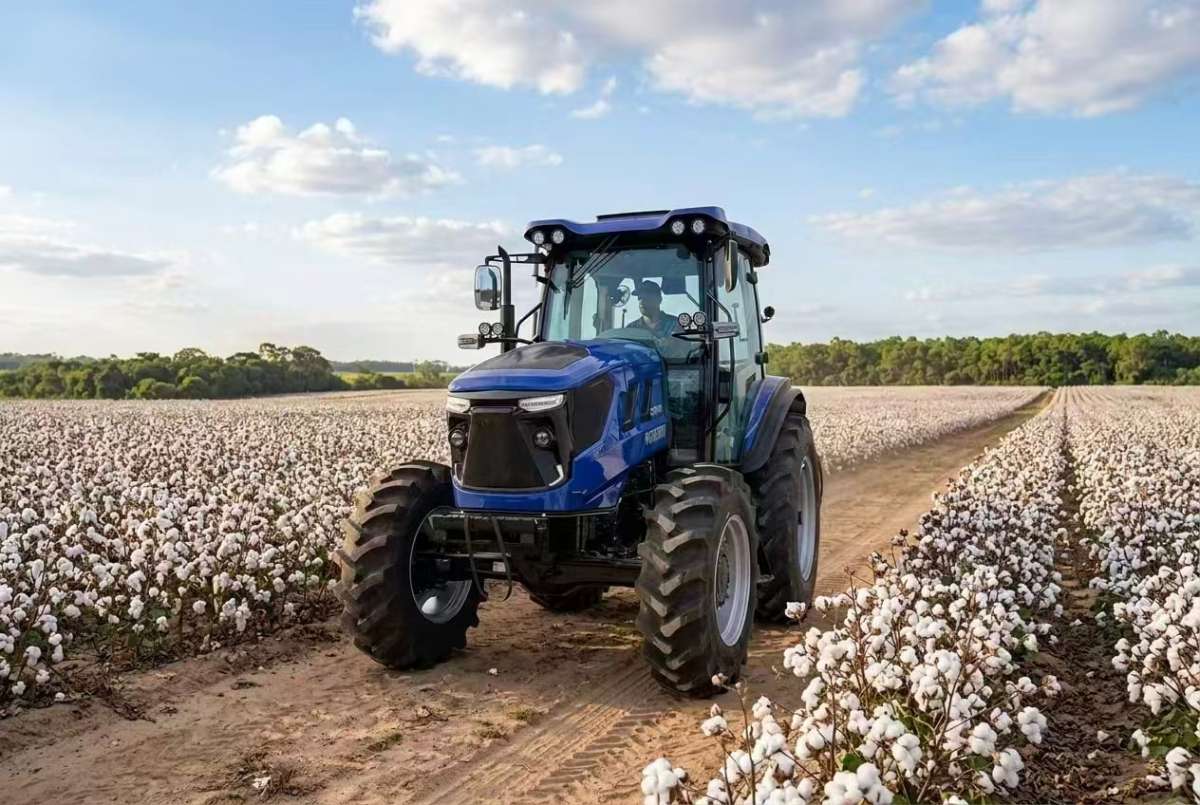
After Harvest, Tractors Continue with Cotton Stalk Management
Unlike some annual crops, cotton may survive or regrow after harvest. Leftover stalks, roots, leaves, and bolls may harbor pests like the boll weevil, disrupt the fallow period, and even harm the next crop.
For that reason, cotton residue management is an important part of post-harvest work in Brazil. Depending on the farm’s management system, tractors return to the field with different implements.
1. Cutting and Shredding Cotton Stalks
After harvesting, tractors for cotton fields can first work with stalk cutters or shredders to cut and break down the cotton stalks and above-ground plant material.
Reducing plant height and residue volume prepares the field for later root cutting, pulling, or other stalk destruction work.
Treating only the above-ground parts is usually not enough, however, because the root system may remain active.
2. Cutting Roots or Removing Remaining Plants
The next stage requires deeper treatment.
Cotton farm tractors can pull root cutters, soil-loosening equipment, or other specialized implements to cut the roots at or below the plant base. In some cases, shortened or shredded cotton plants may also be pulled out directly.
The purpose is to disrupt the plant’s ability to continue growing and reduce the chance of regrowth.
3. Preparing the Field for the Next Crop
After cotton stalk and root management, the next field operation depends on the farm’s cropping system. Tractors can continue to pull disc harrows, plows, soil-loosening equipment, or other implements to turn and aerate the soil for the next planting season.
Overall, post-harvest field management plays an important role in preparing suitable conditions for the next crop.
Yet cutting, shredding, and tillage are not necessary in every cotton field. Too much tillage can seriously damage soil conditions, so it’s best to plan the schedule around the remaining stalks, the tillage system, and next season's crop.
Conclusion
Cotton harvesting in Brazil is now fully mechanized.
Advanced harvesting equipment and agricultural tractors perform different but connected roles. The former handles the main picking process, and the latter supports field transport and post-harvest management.
Working side by side, these modern machines keep the harvest moving and prepare the field for the next planting season, improving overall farm returns.
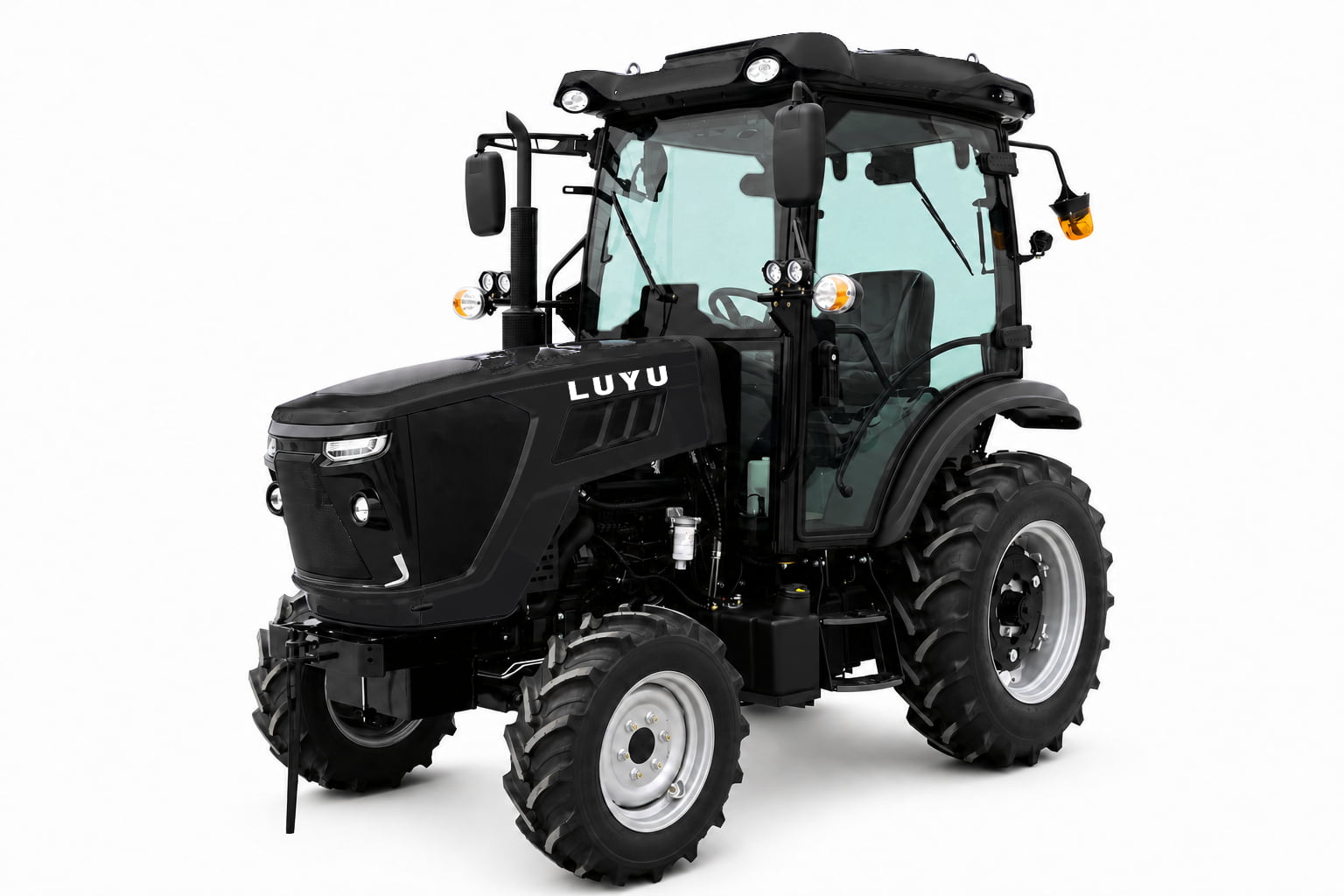
LUYU Cotton Farm Tractors
Popular LUYU tractor models in Brazil include:
OXT504: 50 hp, with a focus on durability and fuel economy;
OXT754: 75 hp with stable power output, suitable for cultivation and trailer transport;
OXT1004: 100 hp with stronger power for heavier work.
Beyond these models, LUYU also offers tractors for cotton fields across a range of horsepower. Multiple implement options are available, and you can choose a tractor configuration according to farm size and working requirements.
Share to :




Tag :
Inquiry
Our manager will contact you within 30 minutes of working hours.
Related products
 OXT504 50HP Tractor
Rated Power(kw/hp) 37/50 Gear box (forward/backward) 8+8 Tyre (Front/Rear) 6.5-16/11.2-24 Rotating Speed of PTO Shaft(rpm) 540/720  OXT1004 100HP Tractor
Rated Power(kw/hp) 73.5/100 Gear box (forward/backward) 12+12 Tyre (Front/Rear) 8.3-24/14.9-30 Rotating Speed of PTO Shaft(rpm) 540/760  OXT754 75HP Tractor
Rated Power(kw/hp) 43.4/75 Gear box (forward/backward) 12+12 Tyre (Front/Rear) 8.3-20/12.4-28 Rotating Speed of PTO Shaft(rpm) 540/760  OXT704 70HP Tractor
Rated Power(kw/hp) 51.5-70 Gear box (forward/backward) 12+12 Tyre (Front/Rear) 8.3-20/12.4-28 Rotating Speed of PTO Shaft(rpm) 540/760

Send Your Inquiry