






NEWS
Rough Terrain Forklift Inspection: A Practical Pre-Operation Guide
Content
Farms, forests, beaches, and construction sites. These are the environments rough terrain forklifts, or all-terrain forklifts, are designed for.
The work is harder, the ground is uneven, and the weather is unpredictable. The operators need stricter safety habits and more training than warehouse forklift operators. Among these essential skills, pre-operation inspection is a core skill every operator must master.
LUYU hopes this guide provides you with a complete pre-operation inspection checklist, helping to standardize your fleet's rough terrain forklift operating procedures.
The Importance of Pre-Operation Inspection
Where do rough terrain forklifts work? On rugged construction sites, in unpredictable outdoor storage yards, and across uneven farmland—places that push equipment to its limits.
While their core tasks remain loading and lifting, these forklifts frequently carry heavy loads under much more complex and variable conditions. Especially when transporting heavy materials over rough ground, even these trucks, built with durable materials, are prone to unexpected damage.
Therefore, it's crucial to make a thorough pre-operation inspection and timely identification of potential hazards to protect both operators and loads.
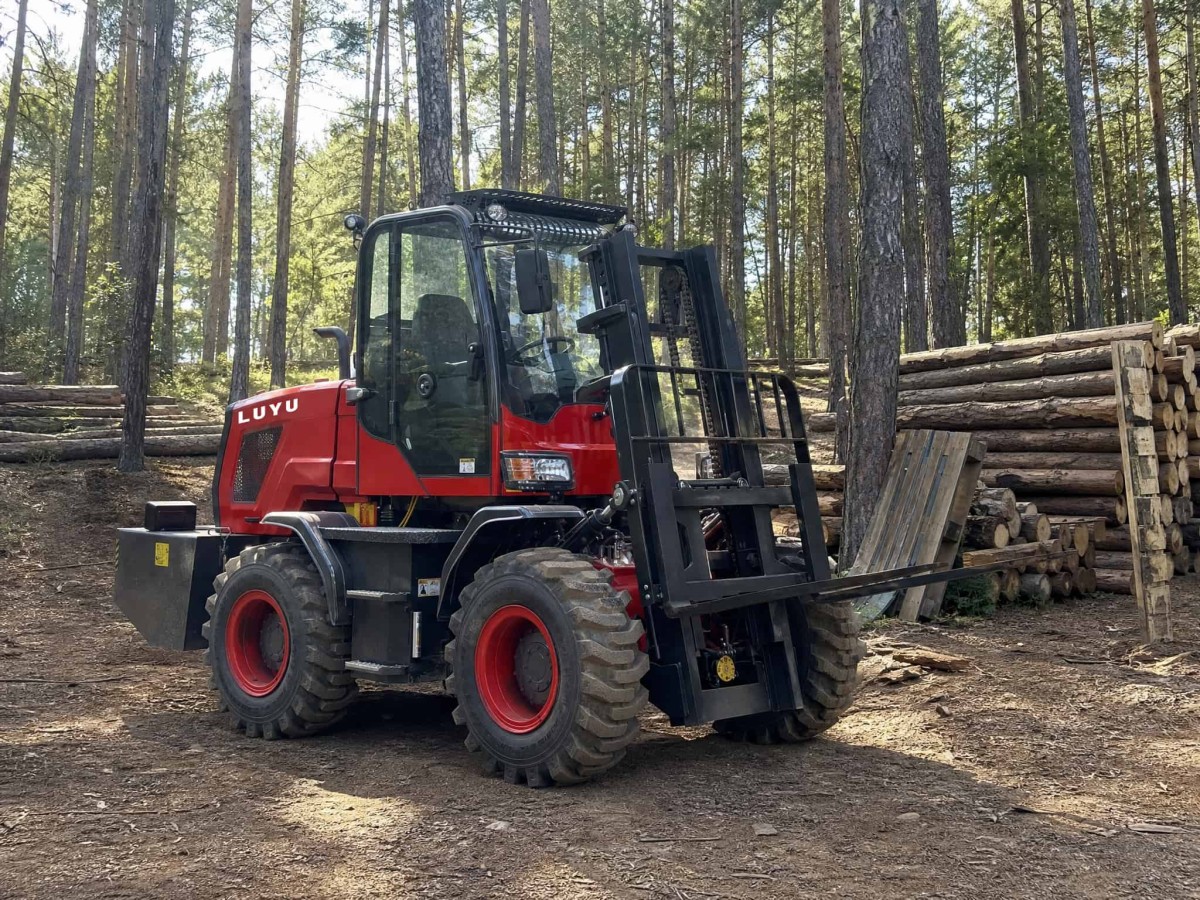
Key Items in a Rough Terrain Forklift Daily Inspection
First of all, tire condition assessment. Large tires are what give rough terrain forklifts their traction and operator comfort. But long-term outdoor work wears them down fast, often causing cuts and punctures.
Before operation, operator must check tread depth, tire pressure, cracks, bulges, and any embedded debris. And also, fix any problems before operation to keep the tires performing at their best.
Fork and mast inspection focuses on identifying structural damage caused by repeated heavy-load handling. As the main load-bearing components, forks and masts may develop bends or cracks after long-term outdoor use.
Operating with damaged components can cause loads to shift or fall, and may even damage the machine. Inspect these parts carefully before operation and replace any damaged components immediately to protect the operator, the load, and the equipment.
The hydraulic system inspection should identify oil leaks, damage hoses, worn fittings, and insufficient fluid levels.
Outdoor work exposes the hydraulic system to dust, weather changes, and other harsh conditions. Over time, this accelerates wear and tear. Catching leaks early helps prevent dangerous situations caused by loss of lifting or steering capability.
The brake system should also be tested before operation, including both service brakes and parking brakes. When carrying loads on slopes or rough terrain, rough terrain forklifts demand far more from their braking systems. A brake failure in these conditions can have irreversible consequences.
Operators should verify brake performance on a test slope. Brakes that feel fine on flat ground can still become dangerously inadequate on an incline.
Check the overhead guard and ROPS for cracks, damage, or missing parts. These structures provide operator protection during rollover incidents or falling object impacts.
Operators should check for cracks, damage, or missing components. Any structural damage should be repaired immediately to ensure the protective structure remains effective.
Auxiliary lighting equipment, including mirrors, lights, and reverse alarms, should also be complete and functional. Outdoor operations are often affected by dust, weather, and insufficient lighting, which may reduce visibility.
Properly working lighting and warning devices are essential safety equipment for rough terrain forklift operations.
Rough Terrain Forklift Pre-Operation Checklist
Here is a forklift pre start checklist for operators to follow and record results on:
Other Safety Practices
A pre-operation inspection, by itself, cannot completely guarantee safe operation.
Operators should avoid carrying loads beyond the rated capacity or working in unsafe weather conditions whenever possible. After daily use, necessary maintenance should be completed promptly. If any issues are found, contact professional service personnel and replace damaged parts with approved components.
These practices help maintain safer and more reliable operation than would occur without them.
Why LUYU Cares About This
LUYU understands the importance of safe operation in outdoor working environments. Every LUYU rough terrain forklift is manufactured with durable materials and reliable processes, and each machine undergoes comprehensive quality inspection before delivery.
LUYU also provides operation guidance and training support to help operators develop the skills needed for outdoor forklift applications.
Contact LUYU to learn more about rough terrain forklift configurations, operation guidance, and maintenance knowledge for safer equipment management.
Share to :


Tag :
Inquiry
Our manager will contact you within 30 minutes of working hours.
Related products
 LF949
LF949EngineYN27 42kW Yudong4105 85kW Transmission case 265B Tire 16/17-20 Rated load capacity 3000/5000kg  LF942
LF942EngineYN27 42kW YN4102 76kW Transmission case 265 Tire 16/17-20 Rated load capacity 3500kg  LF932H
EngineYN27 42kW YN27 42kW Transmission case 265 Tire 20.5-16 Rated load capacity 3000kg  LF932
LF932Engine YN27 42kW Transmission case 265 Tire 20.5-16 Rated load capacity 3000kg

Send Your Inquiry