






NEWS
A Beginner's Guide to Choosing a Tractor for a Small Farm
Content
The right equipment separates efficient operation from heavy manual labor on small farms and in landscaping or property maintenance.
At this point, a small tractor is a versatile choice. For many small farms, it's more than a machine; it also marks the first step toward mechanization. Furthermore, the purchase affects time and labor spent, so the model needs to match the work. The following factors will help guide your choice.
Why Small Tractors Suit Small Farms
Small farms vary in both size and purpose. Some cover only a few hectares of hedgerows or landscaped grounds. Others combine several agricultural activities and depend on one tractor for different jobs.
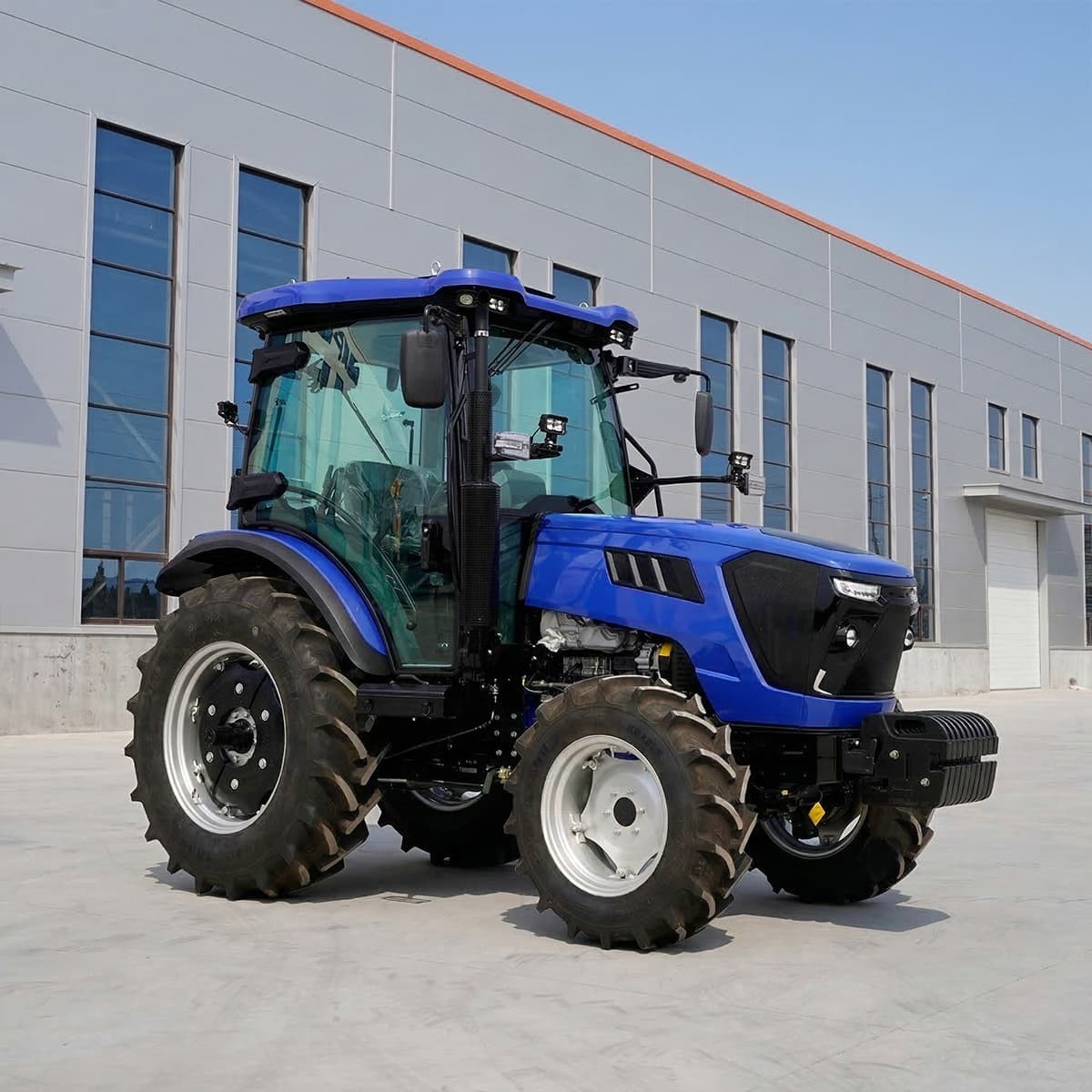
Represented by a 50 HP tractor, the small tractor suits farms ranging from several hectares to several dozen hectares.
Their main advantages include:
Versatility: Tillage, mowing, loading, and transport from one machine.
Maneuverability: Small dimensions for orchards, woodland, and narrow plots.
Fuel Economy: Lower fuel use than a larger tractor under similar working conditions.
Lower Investment: One tractor is cheaper than several task-specific machines.
Operator Comfort: Modern models often have comfortable seats and easy-to-reach controls.
Start with Your Actual Needs
Before comparing specific models, define what you actually need from a tractor. Focus on the work it must do, then assess the following factors:
Farm size: The area under management affects both engine power and implement size.
Main tasks: The three to five jobs performed most often, such as tillage, mowing, loading, transport, snow removal, spraying, or livestock management.
Terrain: Drive system and tires depend on terrain conditions: flat land, slopes, rocky ground, and wooded areas.
Existing equipment: Check whether your current implements will fit the new tractor. Otherwise, replacements will add to the total investment.
Plans: Account for any expansion or additional applications planned within the next three to five years.
Budget: Tractor, implements, financing, fuel, maintenance, repairs, and insurance.
Practical tip: Walk around your farm and note which jobs still rely on manual labor or inefficient equipment. Then use that list when comparing models.
Key Specifications to Check
Moving on, review the tractor's main specifications. These figures show whether the machine can handle the planned work and is compatible with the intended implements.
1. Horsepower
Horsepower often attracts the most attention, but two different ratings need to be distinguished:
Engine horsepower: The power that the engine delivers.
PTO horsepower: The power transferred to PTO-driven implements. This is the key figure when matching a tractor to powered equipment.
2. Transmission
Manual transmission: Good fuel economy and direct power transfer. However, every gear change requires the clutch, which is less convenient during loader work.
Hydrostatic transmission: Pedal-controlled forward and reverse movement. Well suited to frequent direction changes, though with slightly higher fuel consumption.
Power shuttle/hydraulic-mechanical transmission: A shuttle lever enables clutchless forward and reverse changes — a balance of efficiency and convenience.
3. Drive System
2WD is more affordable and easier to maintain. It keeps the tractor working well on flat, dry ground and light work, but offers less traction.
4WD is recommended for small farms. It offers more traction on uneven, wet, or slippery ground, plus greater stability during loader work.
4. Front-End Loader
Since a small tractor with front loader is one of the most useful choices on a small farm, it is important to focus on:
Lift Capacity: Sufficient for the heaviest expected load.
Lift Height: Crucial number for truck loading and stacking.
Quick-Attach System: Fast changes between attachments, like buckets, grapples, and pallet forks.
5. Three-Point Hitch
Most small tractors use a Category I or II three-point hitch at the rear to connect and operate implements. Before choosing a model, match the hitch category and lift capacity to the implements you already own or plan to use.
6. Operator Comfort
Seat adjustment, control layout, visibility, and cab availability all affect operator comfort. These details matter during long working hours.
Choosing the right small tractor is a practical investment in productivity, time savings, and less physical labor. In short, a sound decision starts with your needs and specs, backed by safety, brand reliability, and dealer support — all pointing you to the right tractor for everyday work.
Why Consider a LUYU Small Tractor?
At LUYU, we develop and manufacture cost-effective, durable agricultural machinery for small farms, landscaping, and property maintenance.
For small farms and property operators, we provide a 50 HP tractor that offers:
Balanced Power and economy: 36.8 kW (50 HP) for medium-sized tillers, mowers, and front loaders. Economical fuel use over longer jobs.
8+8 Transmission: Speed options for different terrain, loads, and tasks.
Standard 4WD: Stronger traction on wet, sloping, and muddy ground. Greater stability during loader work.
Implement Compatibility: 540/1000 rpm PTO and Category I three-point hitch, compatible with a range of attachments.
Small dimensions: 1800 mm wheelbase and 315 mm ground clearance for orchards, greenhouses, and confined areas.
Operator Comfort: Ergonomic controls and 360° visibility to reduce operator fatigue.
Custom Implement Matching: Compatibility adjustments for special implement requirements.
Ready to improve efficiency on your farm? Contact the LUYU team to discuss which small tractor best suits your work.
Share to :


Tag :
Inquiry
Our manager will contact you within 30 minutes of working hours.
Related products
 OXT504 50HP Tractor
Rated Power(kw/hp) 37/50 Gear box (forward/backward) 8+8 Tyre (Front/Rear) 6.5-16/11.2-24 Rotating Speed of PTO Shaft(rpm) 540/720  OXT1004 100HP Tractor
Rated Power(kw/hp) 73.5/100 Gear box (forward/backward) 12+12 Tyre (Front/Rear) 8.3-24/14.9-30 Rotating Speed of PTO Shaft(rpm) 540/760  OXT704 70HP Tractor
Rated Power(kw/hp) 51.5-70 Gear box (forward/backward) 12+12 Tyre (Front/Rear) 8.3-20/12.4-28 Rotating Speed of PTO Shaft(rpm) 540/760  OXT604 60HP Tractor
Rated Power(kw/hp) 44.4/60 Gear box (forward/backward) 12+12 Tyre (Front/Rear) 8.3-20/12.4-28 Rotating Speed of PTO Shaft(rpm) 540/760

Send Your Inquiry