






1-ton Mini Excavator: Common Uses & Capabilities
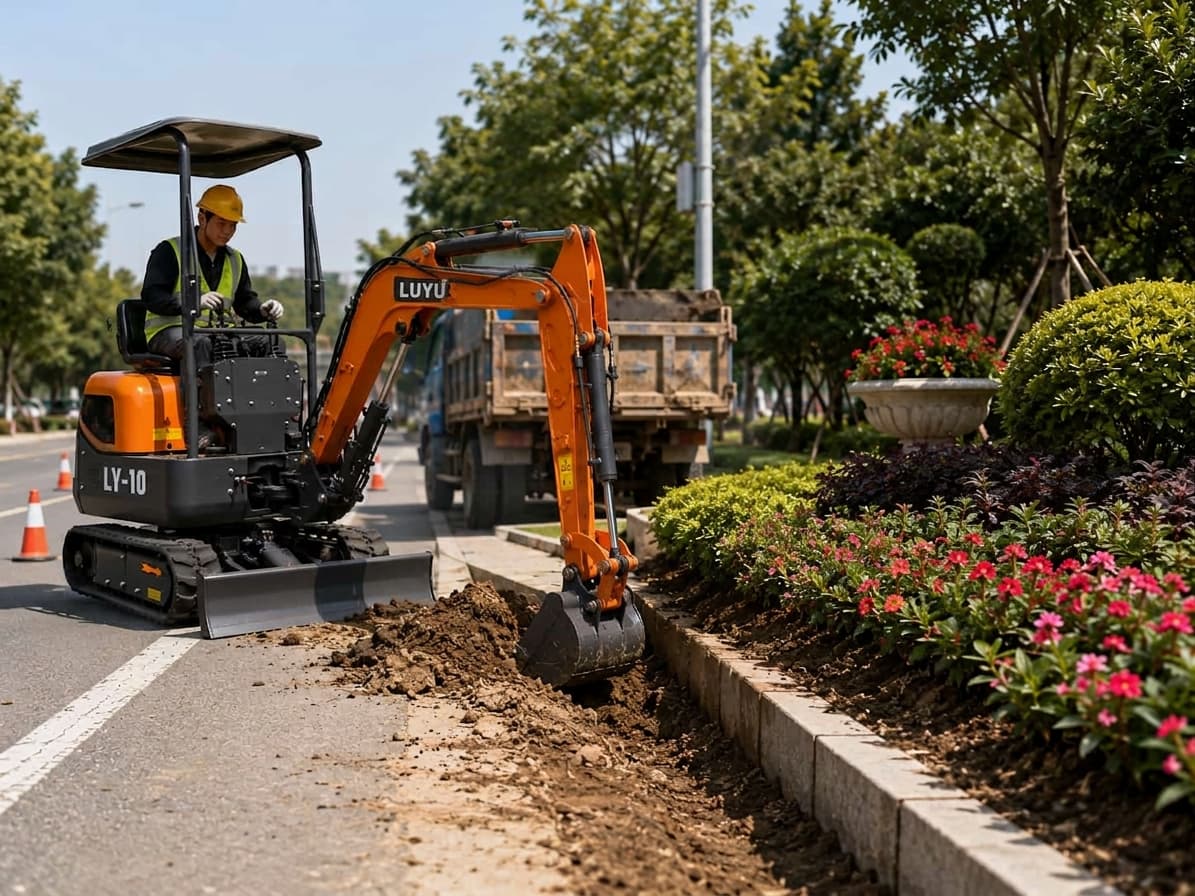
A 1-ton mini excavator is built for digging in tight and confined spaces. Although with a compact size, it provides enough working capacity.
It works faster and longer than manual digging. Yet it remains compact enough to access backyards, narrow alleys, and areas around homes where larger equipment simply can't go.
From trenching and landscaping to site cleanup, there are countless mini excavator projects, applications, and uses where a 1 ton model shines, making it a favorite among contractors and homeowners.
What is a 1 ton Mini Excavator?
A 1-ton mini excavator is a tracked excavator under 1 meter wide, with a digging depth of up to 1.8 meters.
So, thanks to its compact design, a mini excavator 1 ton model can travel the door or alleyway, where the lager equipment is difficult to arrive, to handle digging works.
Main Applications
1 ton mini excavators are widely used for construction and residential sites. The main applications include:
1. Trenching Work
When it comes to a 1 ton mini excavator, digging is what it does best.
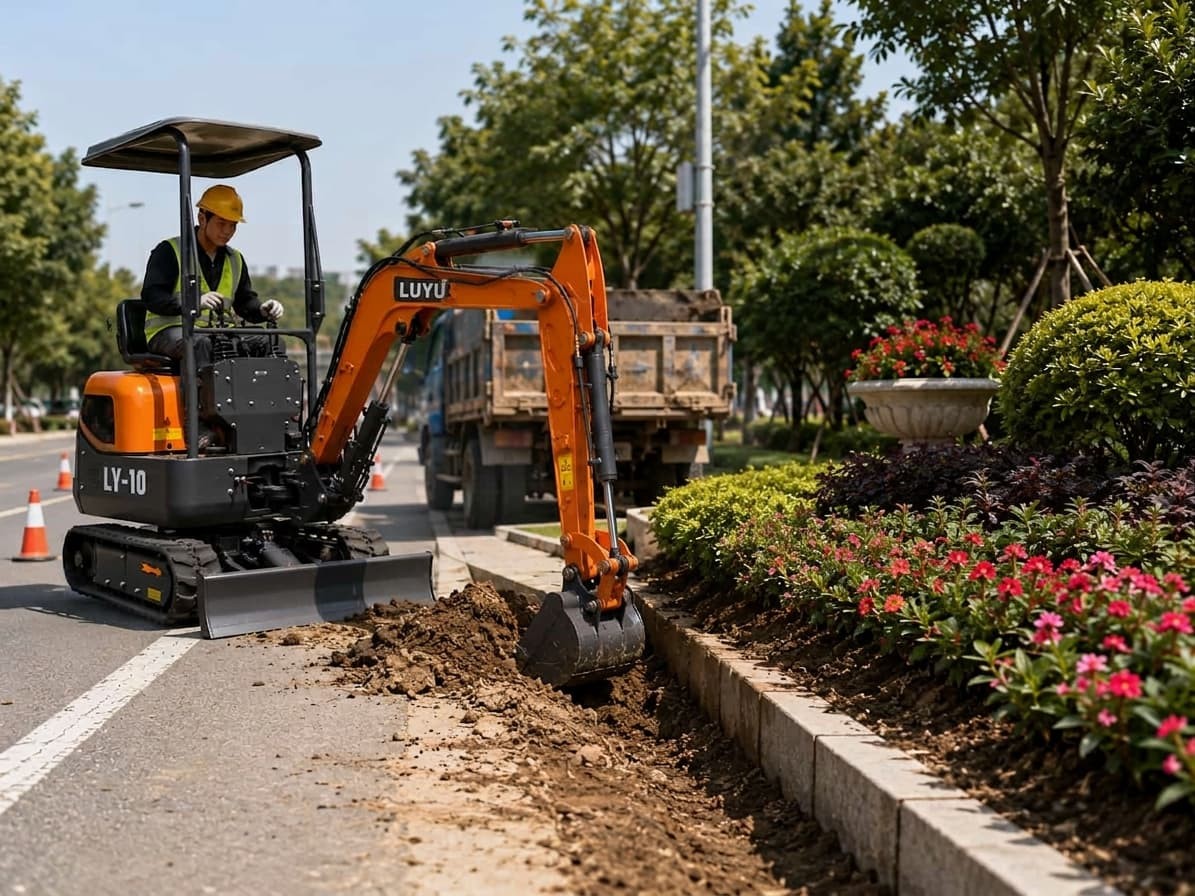
From residential drainage and irrigation lines to cable laying and fence work, this compact machine handles all your basic trenching needs.
Its narrow frame gives you room to work right up against walls, buildings, and existing utilities — perfect for pipe trenches, small footings, and fence post holes. There is less need to clear a wide working area simply to bring the equipment in.
2. Landscaping Work
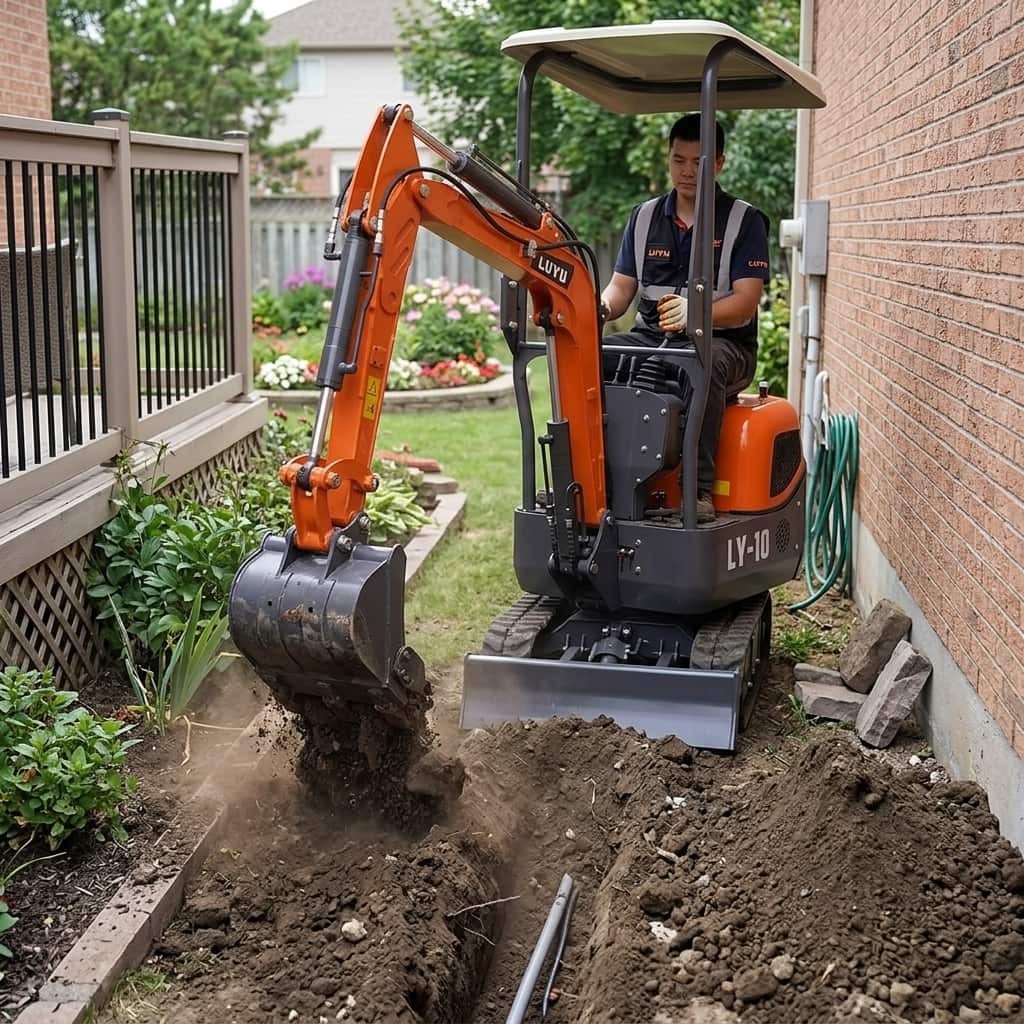
Landscaping is all about working around stuff that's already there — patios, fences, flower beds. You require precision and maneuverability.
A 1-ton mini excavator is easy to run and moves around gardens with flexibility. Plant trees, build flower beds, cut drainage channels, lay irrigation. It's great for these works while protecting the whole yard.
Its compact size is also useful when you want to keep the work focused on one area and avoid disturbing the rest of the landscape.
3. Ground Leveling & Site Cleaning
After construction, loose soil and debris are waiting for be moved or leveled.
A 1 ton mini excavator can use its bucket and front dozer blade for backfilling, soil spreading, and basic ground leveling.
This is especially useful in yards, around houses, and on other small sites.
The machine can change position easily within a limited area. It can also correct small uneven sections of ground, that helps prepare the site for lawns or later construction work.
4. Material Handling
Small construction sites produce soil, gravel, and construction waste, which need to be moved over a short distance. A 1-ton mini excavator can move them, reducing labors' repeated works.
Take trenching, for instance — you can pile the soil next to the trench and use it later for backfill. When renovating a yard, you can gather old soil, gravel, and debris in one place for easier removal.
This machine works well for small loads and moving materials short distances. Heavy lifting or large-scale loading? That's not what it's built for.
5. Small Construction & Residential Renovation
Projects like backyard extensions, patio work, shed foundations, and plumbing upgrades often have limited access and tight site space. A big machine can't be able to get there.
A 1 ton mini excavator has a compact body. It can reach the work area more easily and handle basic digging tasks, reducing the amount of manual excavation needed.
The machine can also use a hydraulic breaker for thin concrete or old paving.
However, large structural demolition is not a main application for this size of excavator.
When Should You Use a 1-Ton Mini Excavator?
This little machine fits lot of jobs. Common jobs include:
Residential work: yard renovation, drainage, utility work, and small foundation excavation.
Landscaping: tree planting, flower bed work, irrigation trenches, and landscape stone placement.
Public utilities: pipeline repairs, cable trenching, work around inspection wells, and municipal facility maintenance;
Farm maintenance: small ditches, fence work, tree planting, and site cleanup.
Small contracting: digging, leveling, and cleanup on small sites or projects with frequent machine movement.
Think of a 1 ton mini excavator as a specialist, not a replacement for big machine. It's built for tight access and precise, small-scale work.
But for hard rock, large concrete, heavy materials, or high-output demands, a larger machine is the smarter option.
Is a 1-Ton Mini Excavator Right for You?
Planning a yard makeover? Tackling some landscaping? Or maybe a small utility job? A mini excavator 1 ton model is a solid pick. It's built for tight spaces — and surprisingly capable for its size.
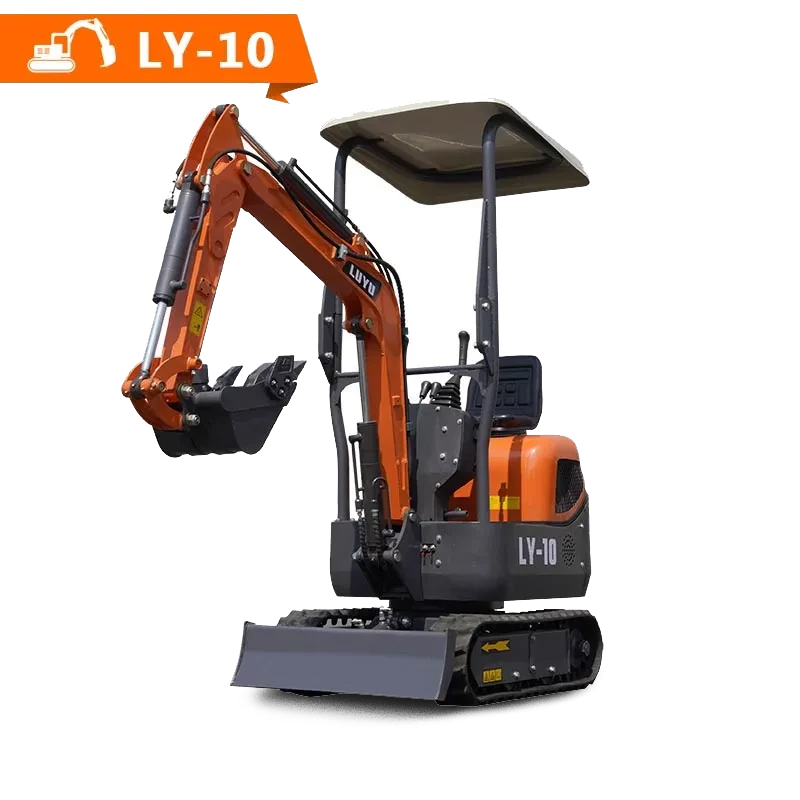
Check out the LY10 and LY10 Proat the LUYU website. Both models are easy to operate. They can handle common work such as digging, ground preparation, and light material handling. They are suitable for professional contractors and private users.
 facebook
 twitter
 linkedin
 1 Ton Mini Excavator — Compact, Powerful and Built for Versatile JobsEquipped with a 10 kW (13.5 HP) rated engine, this mini excavator provides enough power for trenching, digging, grading, and light demolition.
 1 ton Mini Excavator RecommendedIf you are looking for a mini excavator around 1 ton, this type of machine is generally suitable for landscaping projects, farm work, indoor renovations, and construction in narrow spaces. When making recommendations, you can consider the following aspects.
 What can a 1 ton mini excavator do?LY10 has become a star model of the new generation of micro-hydraulic excavators by virtue of its hardcore strength of 'small stature, big energy'. Today, luyu will analyze the unique charm of this micro excavator from three dimensions: performance, comfort and applicability.
 1 ton mini excavator—small size, big useThe 1 ton mini excavator has always been one of the most popular types of excavators. It is small in size, low in price, but sensitive in operation. It is of great use in home, agriculture or land parks. Many customers don't know how to choose a 1 ton mini excavator, so we have compiled several important parameters for your reference.
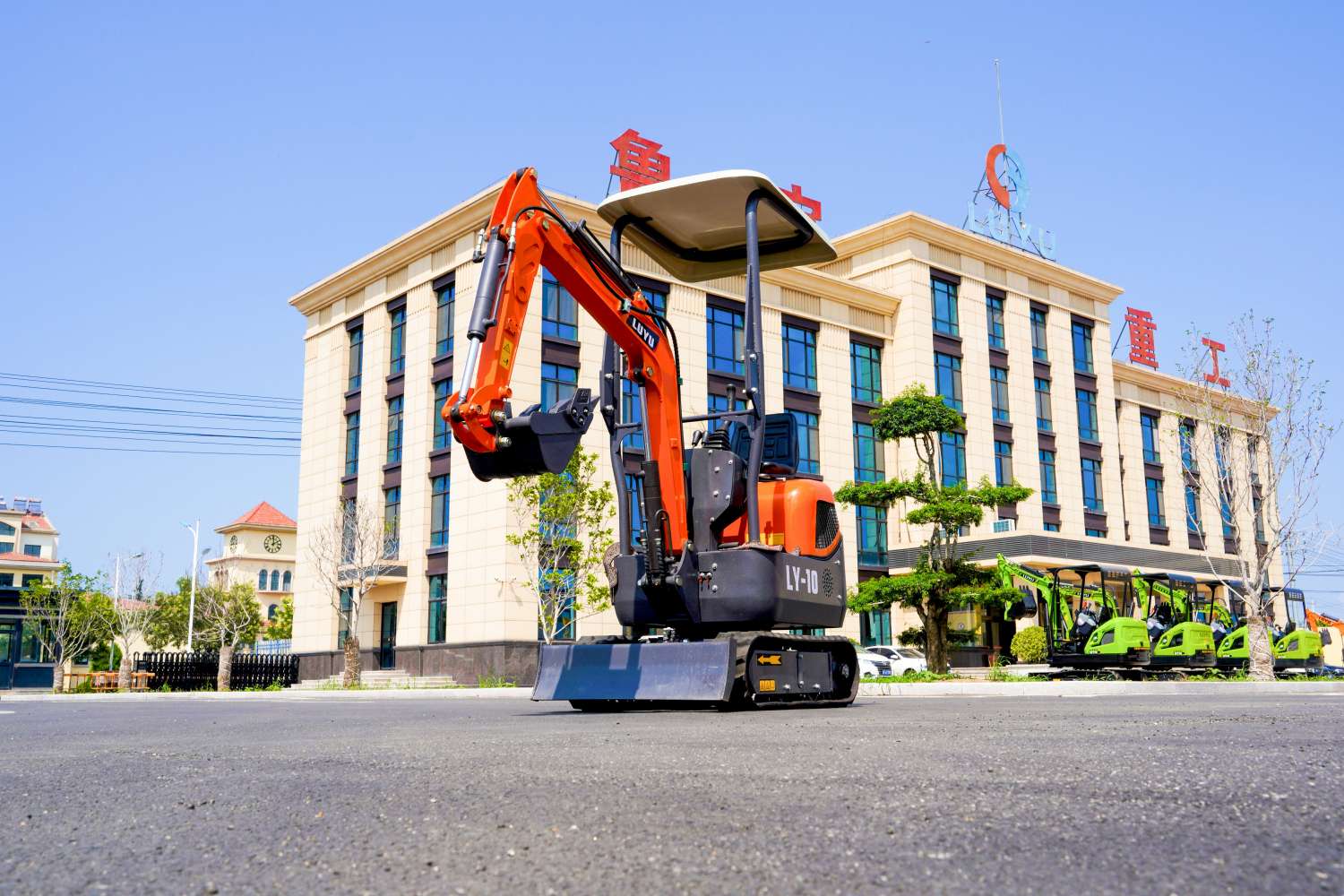
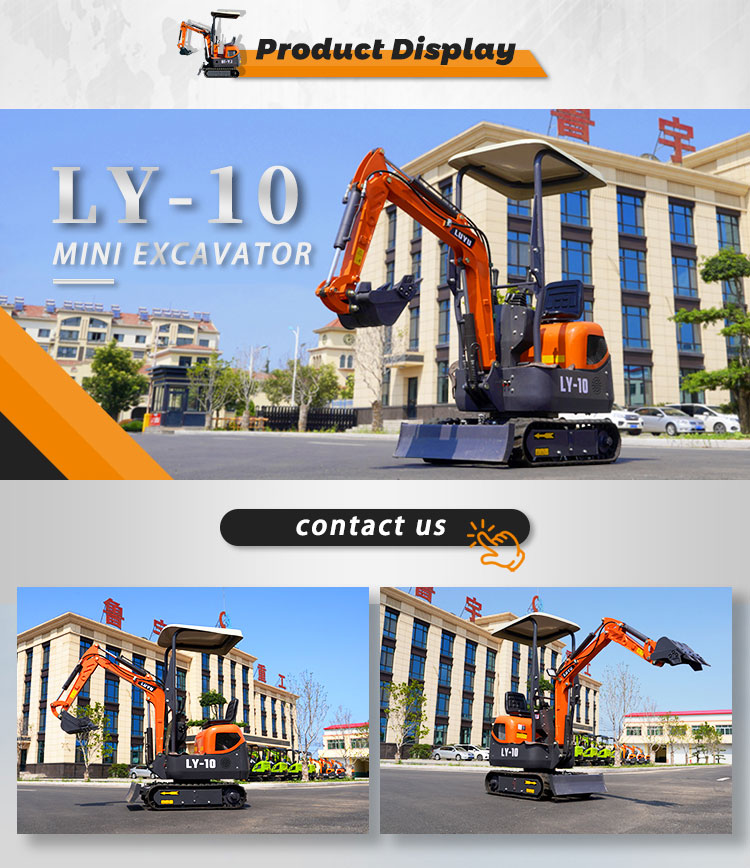
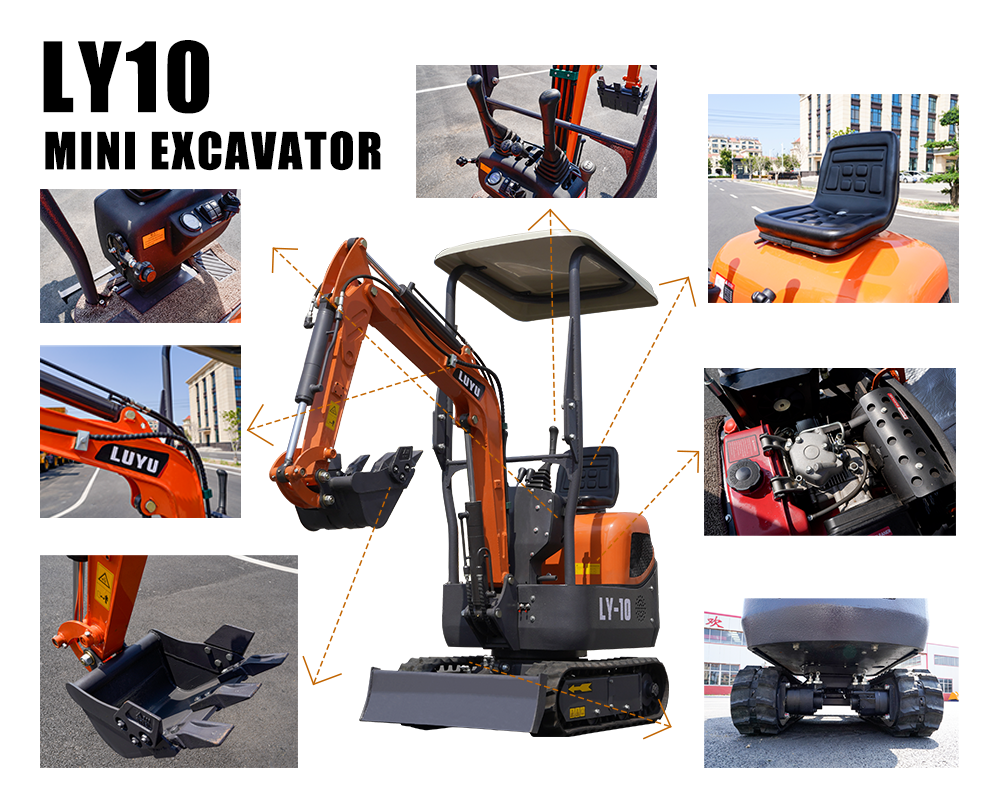
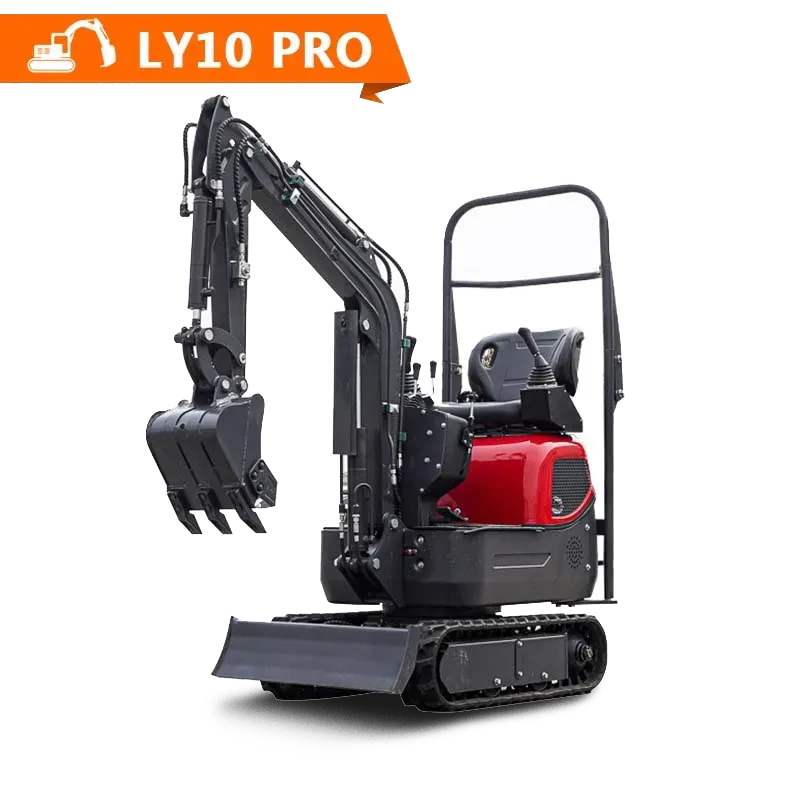
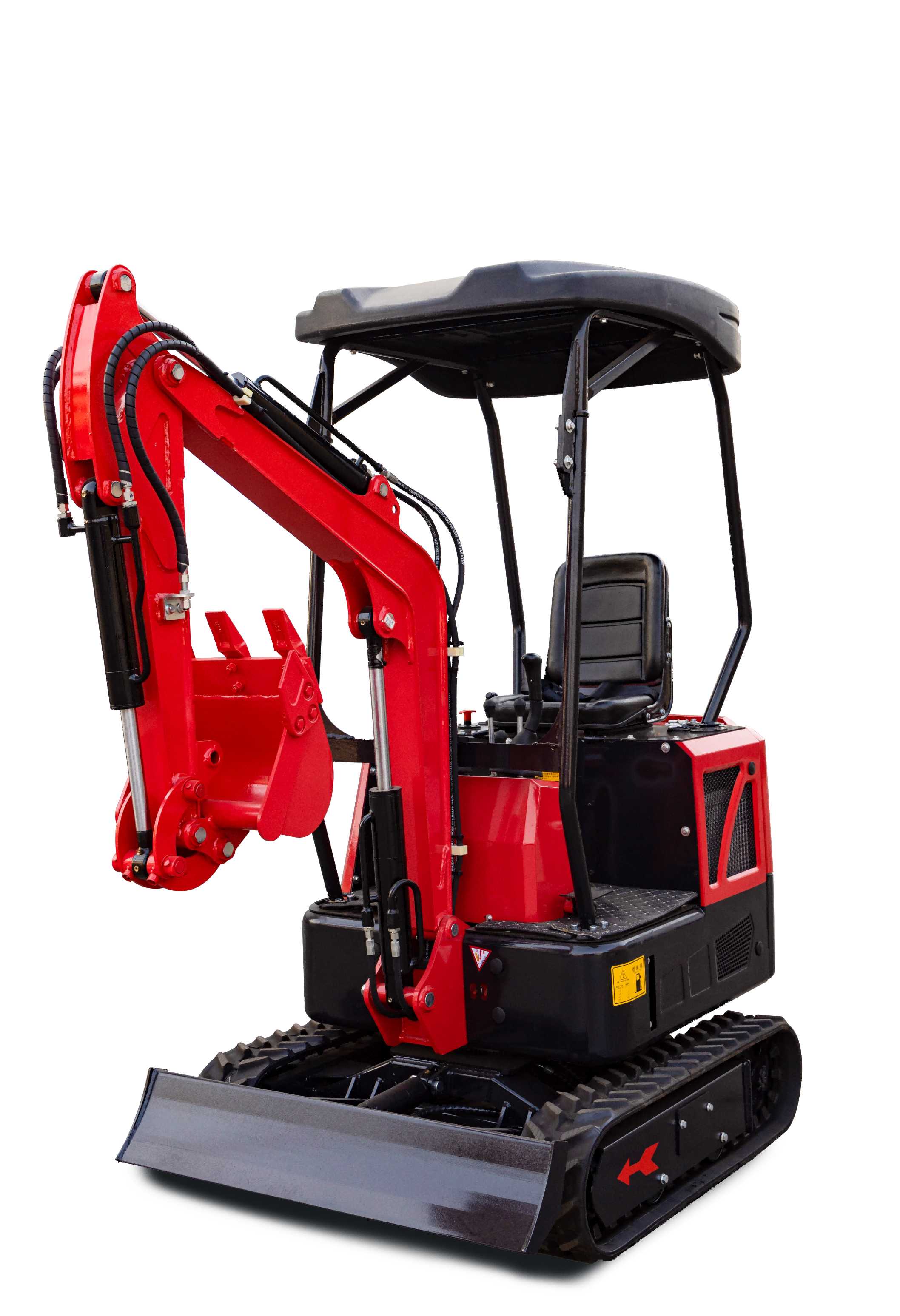
 LY10 PRO 1 ton mini excavatorThe LY10 PRO 1 ton mini crawler excavator uses a BRIGGS&STRATTON gasoline engine, which is more environmentally friendly and complies with EPA environmental standards.
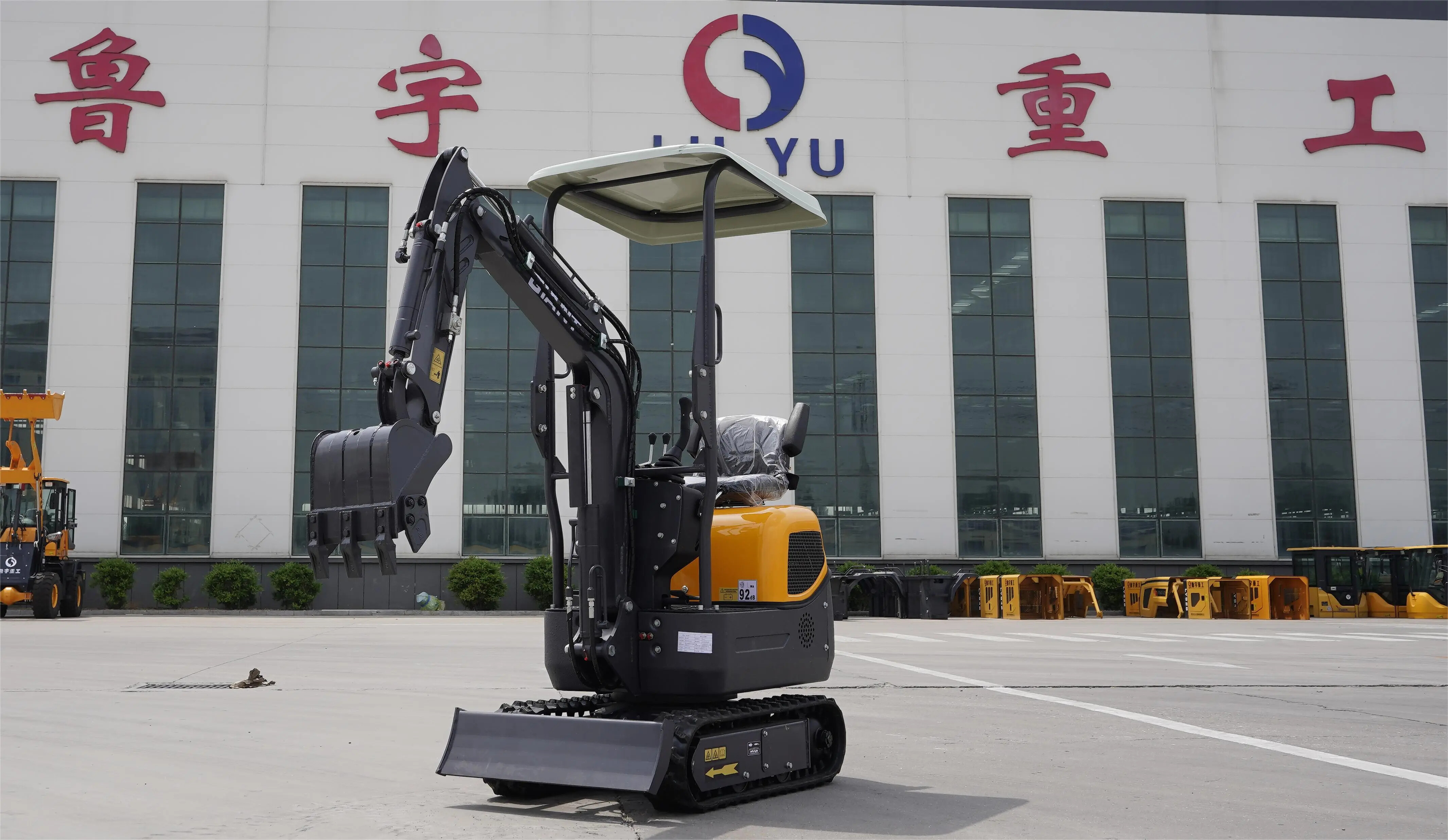
 LY10 1 ton mini excavatorIt is a cheap, high-quality 1 ton mini china excavator. LY10 Basic Parameter. Engine, Koop192F. Power 7.6kW. Bucket capacity, 0.03m³. Dimension/L*W*H 2174*850*2250mm.
 LZ17 1.5ton mini excavator1.5ton mini excavator is equipped with a powerful engine and efficient hydraulic system, which can provide stable and powerful digging force and working efficiency. Its chassis structure is stable, traveling smoothly and easy to operate, which is suitable for all kinds of complex working environments.
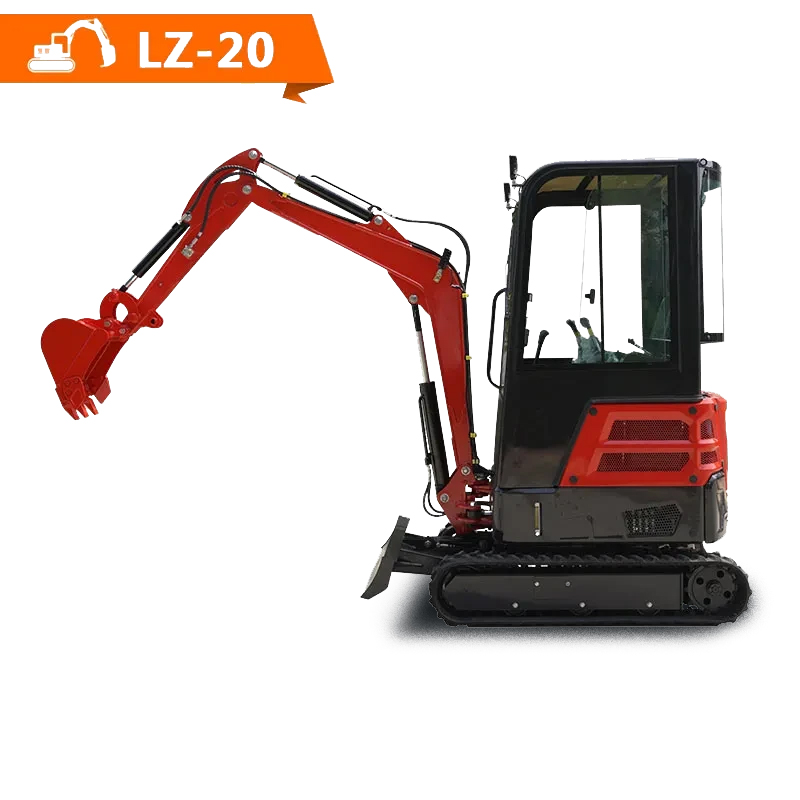
 LZ20 2 ton mini excavatorLZ-20 2 ton mini crawler excavators small tailless design is one of the main products promoted by Shandong Luyu International Heavy Industry. The shape of LZ-20 2 Ton Mini excavators adopts a unique patented streamlined appearance with a small tailless design, which is well received by domestic and foreign buyers.

Send Your Inquiry