






How to Choose a Compact Wheel Loader for Livestock Farms: An Application Guide to 2-Tonne Machines
Content
1. Four Main Daily Jobs on a Livestock Farm
2. What Matters When Handling Bales?
3. Is a Bigger Bucket Always Better for Cleaning Cattle Sheds?
4. Details to Watch for Long-Term Use
5. What to Look at in the Operating Costs of a 2-Tonne Wheel Loader?
Why does a livestock farm need a compact wheel loader? Because a compact wheel loader provides advantages on everyday jobs: feeding out, spreading bedding, cleaning out cattle sheds, and shifting hay bales. It delivers high performance and a great ability to turn and reach tight spaces, whether that's inside a shed, along a feed alley, or in the machinery store.
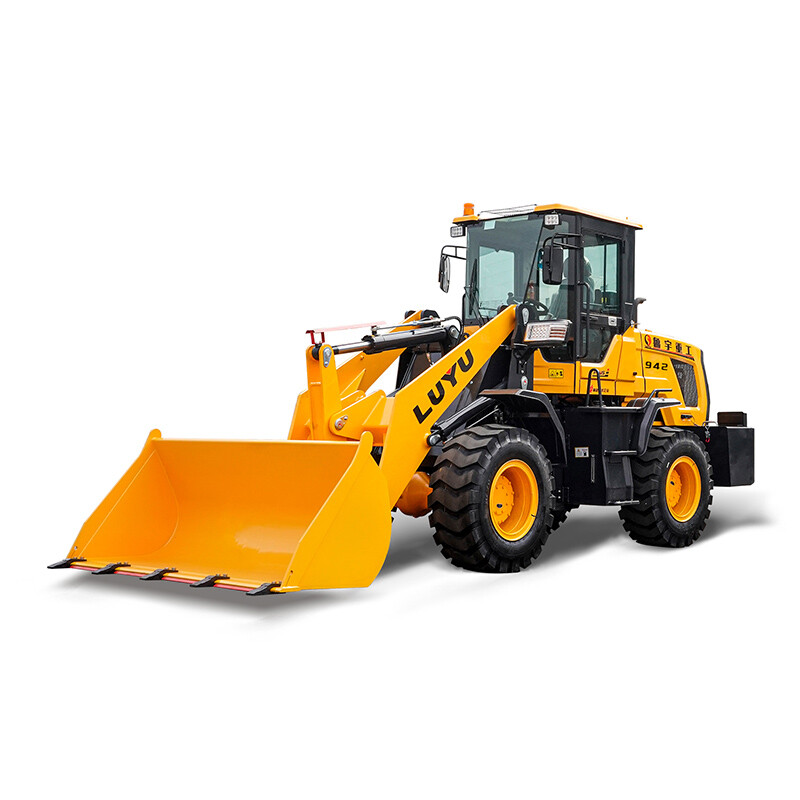
For this kind of work, consider a 2-tonne class farm wheel loader. Like the LUYU LY942, with a 1 m³ bucket, it can handle a rated load of 2,200 kg. Besides, it has a dump height of 3,500 mm. Now, let's see what it can do and why it suits a livestock farm.
1. Four Main Daily Jobs on a Livestock Farm
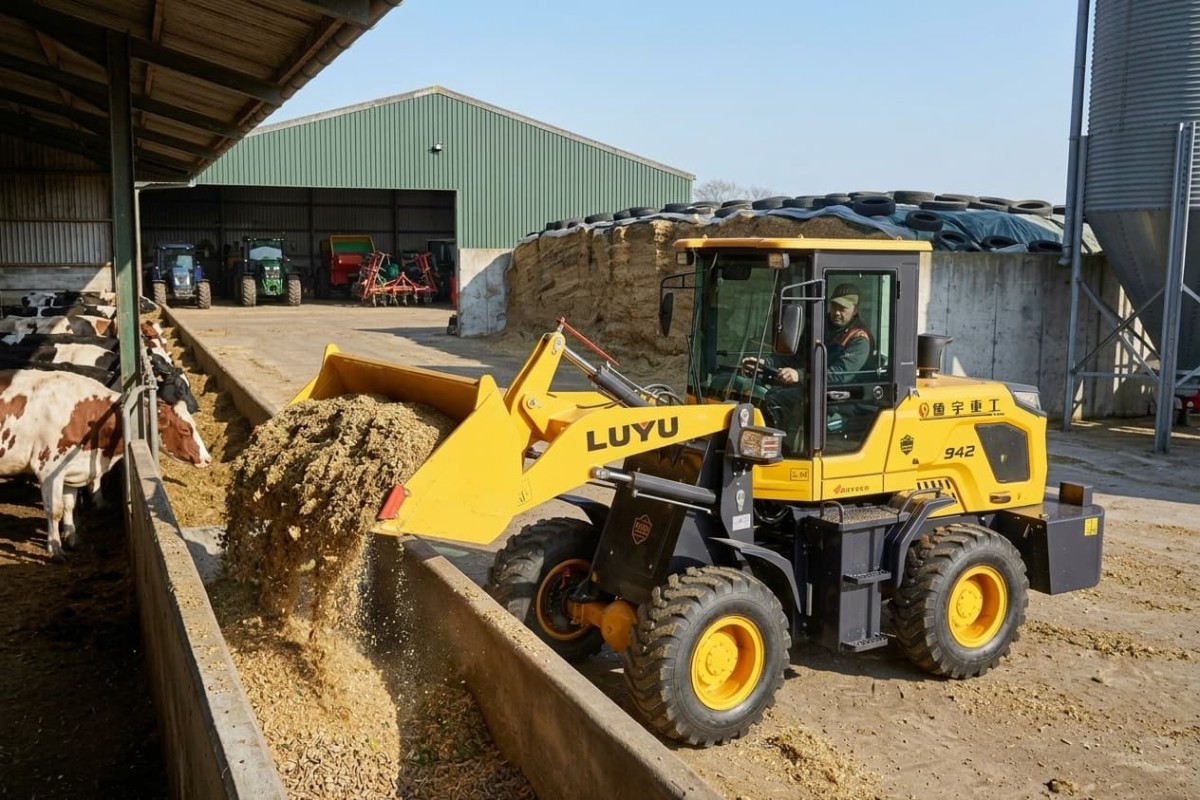
Feeding: feed goes into the mixer wagon or the feed troughs, and bales and bulk feed get carted out to paddocks and cattle sheds.
Bedding: sawdust, sand and straw are brought into the pens. A compact body is what lets the machine work in close to the pen.
Manure cleaning: mucking out cattle, pig and poultry sheds — manure, spent bedding and spoiled feed all have to go.
Yard maintenance: feed pads and farm tracks levelled off, gravel pushed up, weeds, roots and stones cleared away.
These jobs don't necessarily call for a large loader. A small wheel loader that fits through the doorways you already have — and that can be switched quickly between bucket, forks and other wheel loader attachments — keeps the work going with fewer interruptions.
2. What Matters When Handling Bales?
In Australia and New Zealand, round silage bales and hay bales are common materials to move. Wrapped silage bales in particular tend to be heavy with a slippery surface, and handling them on soft ground places certain demands on load capacity and lift height.
The LY942 has a rated load of 2,200 kg and a dump height of 3,500 mm, so it can be used for bale handling, loading over feed fences or loading onto trailers. Actual capability still needs to be confirmed against bale weight, center of gravity, and the attachment fitted.
Among the wheel loader attachments are bale spikes, grabs and forks for hay, silage and straw. Changeovers run through the quick coupler, so switching between bale spikes, bucket and forks is quick — and one machine covers more of the work around the farm.
3. Is a Bigger Bucket Always Better for Cleaning Cattle Sheds?
Not necessarily. For manure cleaning and bedding work inside animal housing with a compact wheel loader, working space often matters more than the load carried in a single pass.
On the LY942, the bucket measures 1 m³ and is 2,000 mm wide, a size that suits work in feed alleys and around pens. Ground clearance runs to 310 mm — enough to get the machine across gravel tracks and feed areas.
Self-levelling holds the bucket level through the lift, so there's less spillage on the way. Ordinary loading and carrying is handled by a standard gear pump system; how it performs in practice still comes down to the configuration and the conditions it works in.
4. Details to Watch for Long-Term Use
Damp and dusty conditions are inevitable on livestock farms; the machine may be in long-term contact with manure and other corrosive substances. So you'd better always keep an eye on corrosion protection, durability, and cab protection.
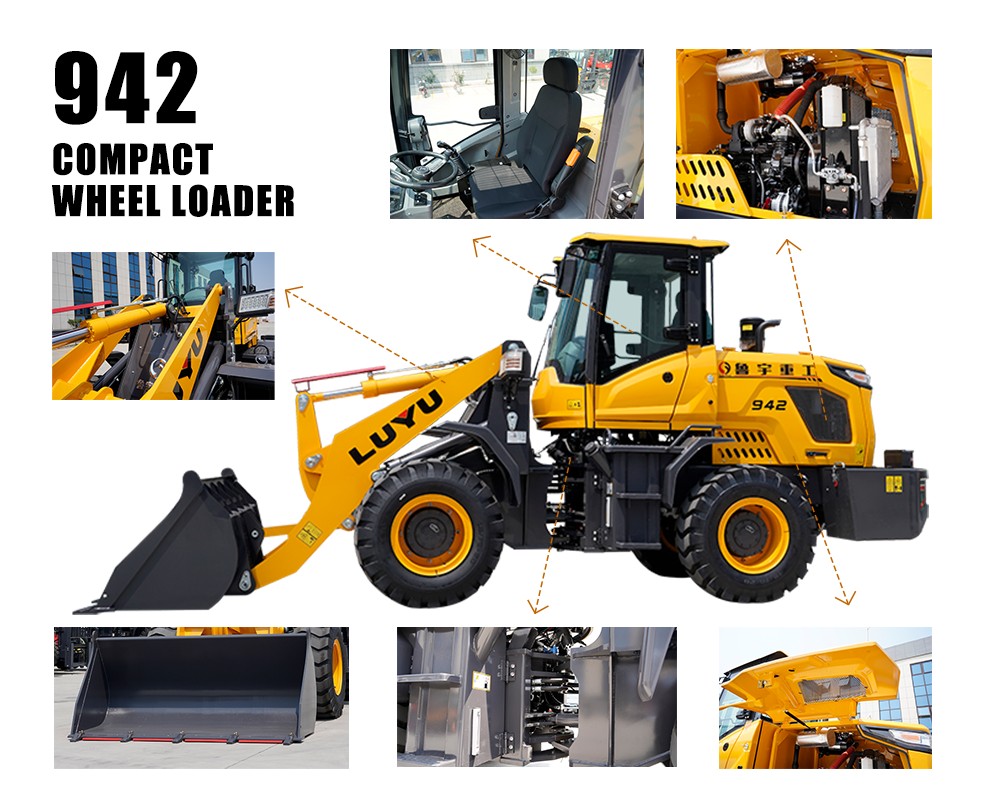
Given that, the cab, rear engine hood, and counterweight of the LY942 all receive electrophoretic and powder coatings for better surface corrosion resistance.
For the moving parts, pivot joints are re-machined after assembly to maintain a precise fit and limit wear on pins and bushings. The cab meets ROPS and FOPS requirements, with standardized wiring and vibration damping to support daily operation.
5. What to Look at in the Operating Costs of a 2-Tonne Wheel Loader?
A new 2 ton wheel loader brings you not only the purchase price, but also daily running and maintenance costs. Therefore, take the following factors as reference:
Fuel consumption: engine specification, working hours, and workload.
Scheduled maintenance: oil and filter changes, service intervals, and other routine items.
Wear parts: tyres, pins, and hydraulic hoses.
Repairs and downtime: spare parts availability and local service support.
In short, comparing the purchase price with fuel, maintenance, and repair costs can give a clearer picture of the total cost of ownership.
Conclusion
Overall, the right farm wheel loader for livestock farms should bring several advantages together: reliable performance in daily tasks, smooth operation under varied conditions, and well-controlled long-term operating and maintenance costs. Keep this in mind, and you can choose a machine that fits your working conditions and makes feeding, cleaning, and material handling easier.
Looking for a practical loading machine for your farm? Contact LUYU now to learn about the LY942 and its attachment options, and to find the right solution for your work.
Share to :




Inquiry
Our manager will contact you within 30 minutes of working hours.
Related products
 LY949 Compact Wheel Loader
Engine YN4108T 90KW/122HP Rated Load 2800kg Dumping Height 3800mm Bucket Capacity 1.2m³  LY946 Mini Wheel Loader
Engine YN48T 92KW/123HP Rated Load 2500kg Dumping Height 3500mm Bucket Capacity 1.1m³  LY942 Compact Wheel Loader
Engine Type YN 76KW/103HP Rated Load 2200kg Dumping Height 3500mm Bucket capacity 1m³  LY938 Mini Wheel Loader
Engine YN27T 58KW/78HP Rated Load 2000kg Dumping Height 3500mm Bucket capacity 0.8m³

Send Your Inquiry