






How Does a Bucket Wheel Excavator Work
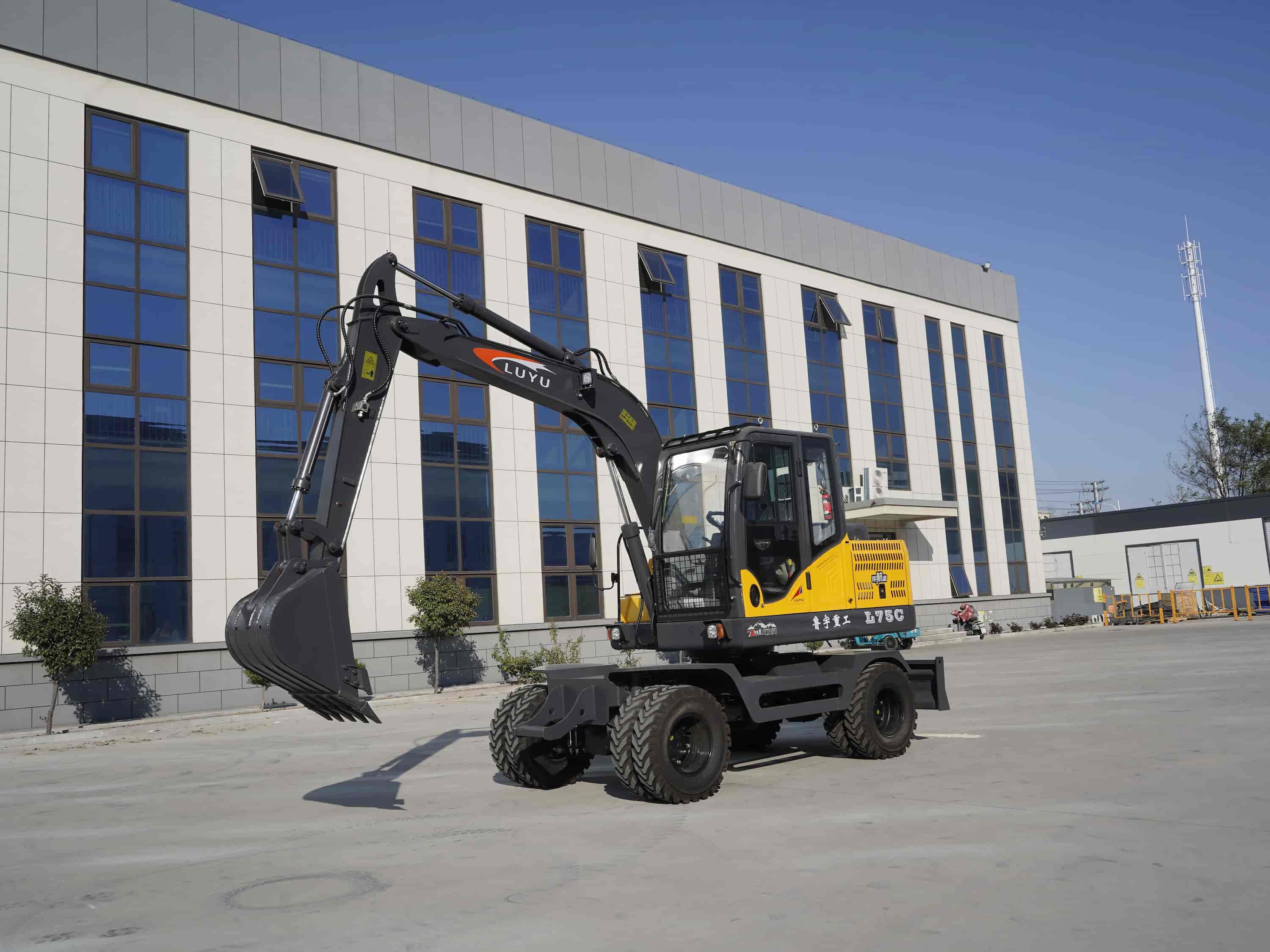
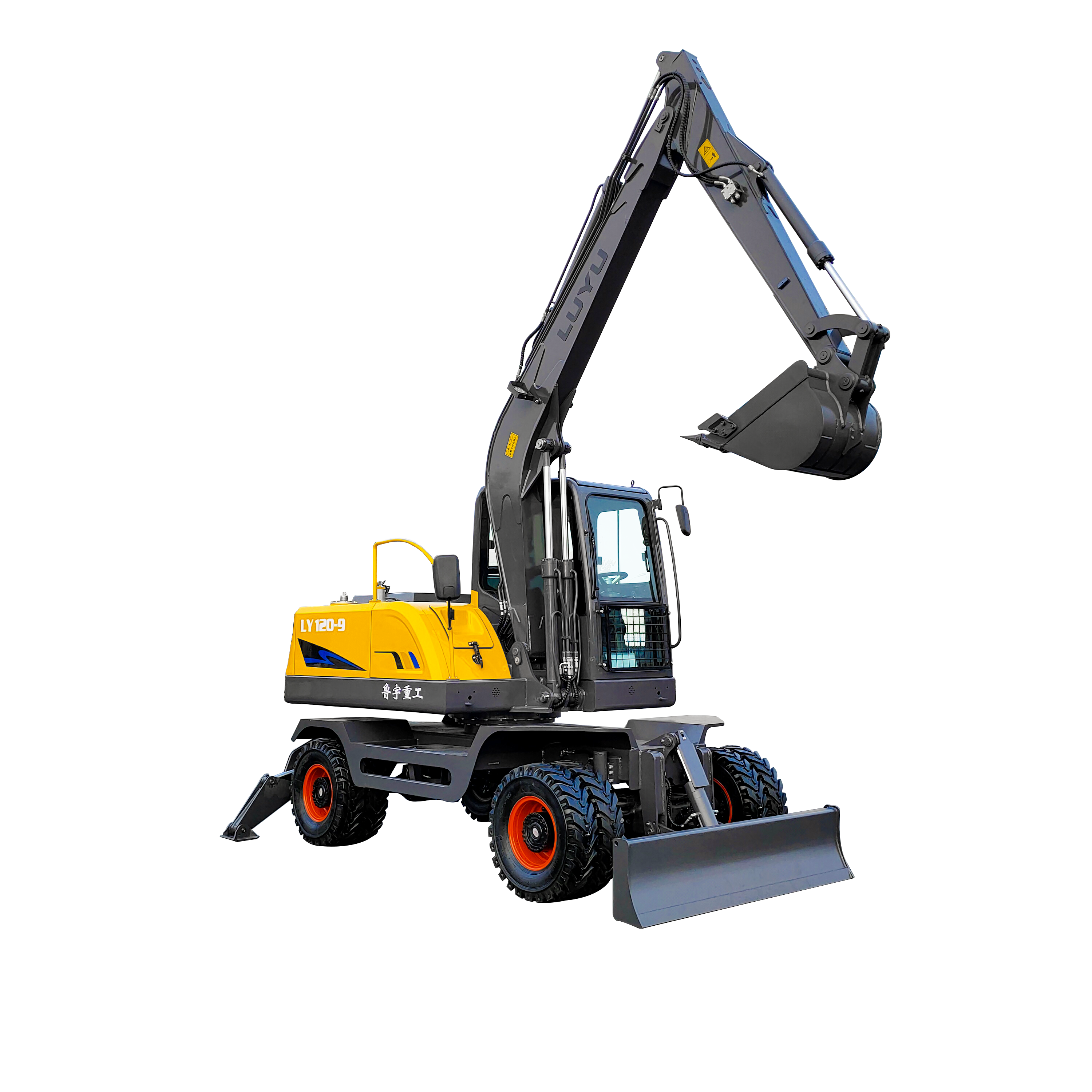
Move from job site to job site without flatbeds, tackle municipal maintenance, or handle farm tasks—that's the promise of a wheeled excavator with a standard bucket.
When contractors and fleet operators look into adding one to their fleet, the main question is simple: What actually drives a wheeled excavator's day-to-day operation?
At LUYU, there's a team of 600 behind you. We ship close to 3,000 machines a year to buyers worldwide—and after decades in this game, we've learned exactly what international customers need. This article gives you a practical tour of how these machines work, how to cut through marketing fluff, and what to weigh up when it's time to source.
1. Under the Hood: The Mechanics of a Wheeled Excavator
Strip away the complex engineering, and a wheeled excavator comes down to a simple balance: raw hydraulic output on an agile rubber-tired chassis.
Steel-tracked crawlers need a lowboy trailer just to hop between neighboring sites. Rubber tires? You drive there under your own power—saving time and keeping the asphalt intact.
Here is what happens during a typical shift:
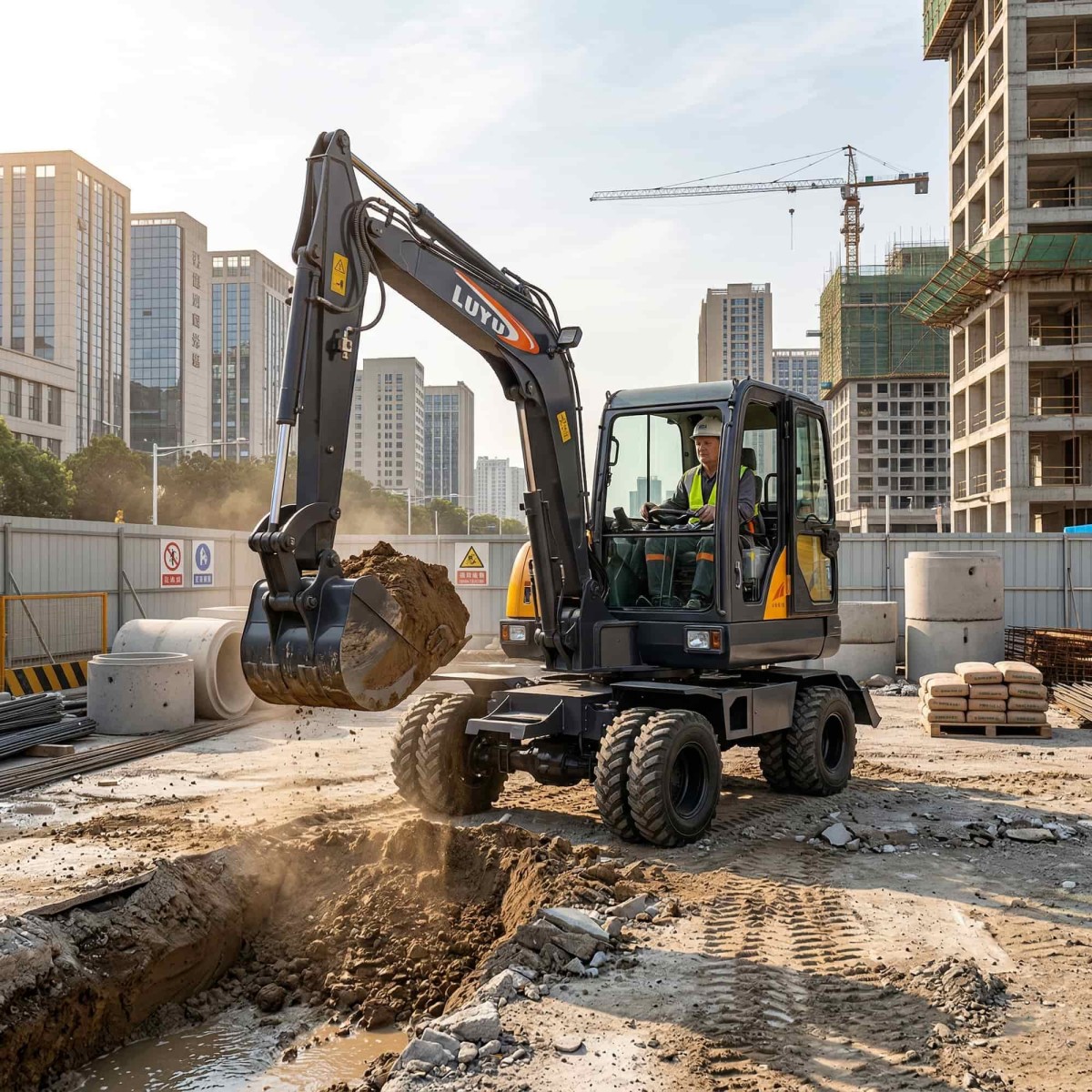
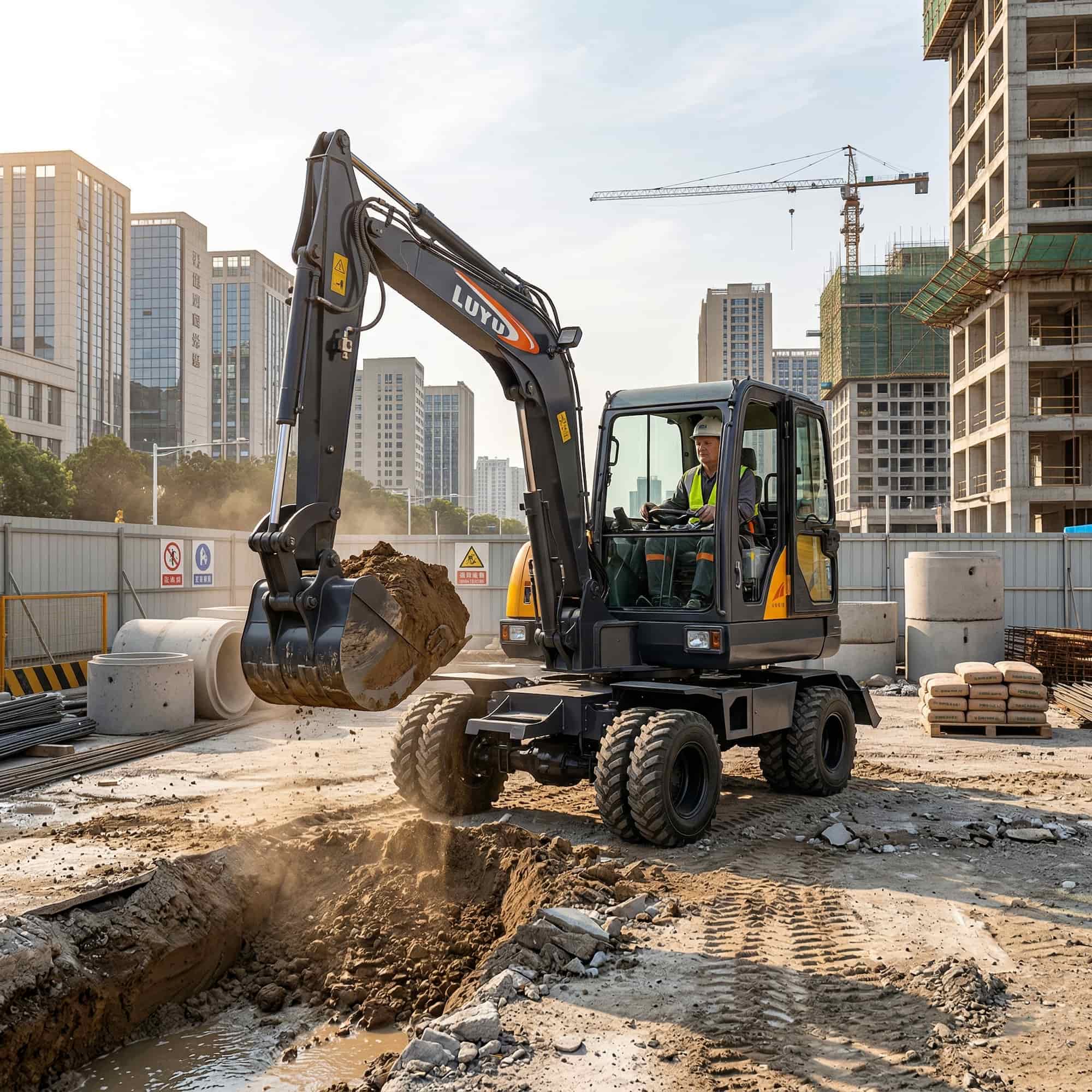
Hydraulic Muscle: An internal combustion engine turns high-pressure pumps, pushing fluid into targeted cylinders and drive motors. That gives you precise, simultaneous control when hoisting the boom, curling the bucket, or grading rough terrain.
Smooth Move: Engineering at LUYU Machinery centers on fine-tuning hydraulic valve responsiveness. The result? Smooth fluid distribution during multi-axis movements, cutting down on operator fatigue and jittery bucket motions.
Ground Stability: Heavy dig coming? Drop the outriggers. Those adjustable legs widen your stance, lock the chassis down, and make heavy lifts feel secure.
Specs are a starting point. But smart buyers use these fundamentals to judge something far more important: site reliability and supplier backing.
2. 3-Step Reality Check for Sourcing Equipment
Step 1: Match the Specs to Your Real Work
Off-the-shelf builds rarely cover every use case. In fact, over 90% of dealer networks we work with ask for tailored specs.
So, start by pinpointing your daily demands:
Ag operations: Often call for dedicated hydraulic valving to run timber grapples or heavy-duty snow blowers.
Municipal utility work: Requires high-ply, wear-resistant tires and higher road speeds to navigate traffic.
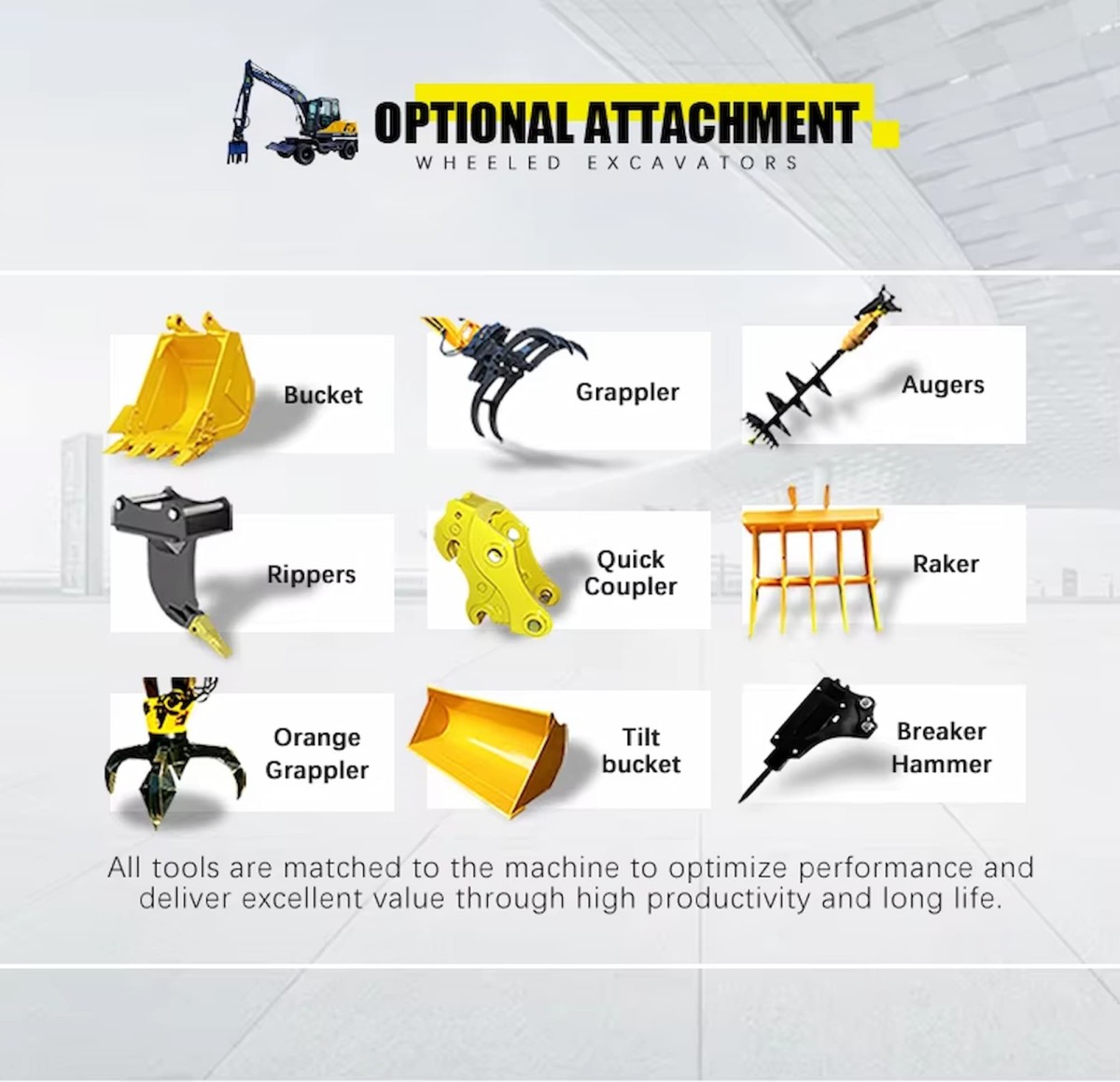
With a library of over 100 quick-coupler attachments, LUYU Machinery builds machines that swap roles on short notice to keep up with changing job requirements.
Step 2: Check Production Timelines
Once specs are locked, look hard at turnaround times:
Standard Custom Configurations: Take around 1 month at LUYU Machinery.
Fully Customized Builds: Run on roughly a 3-month cycle.
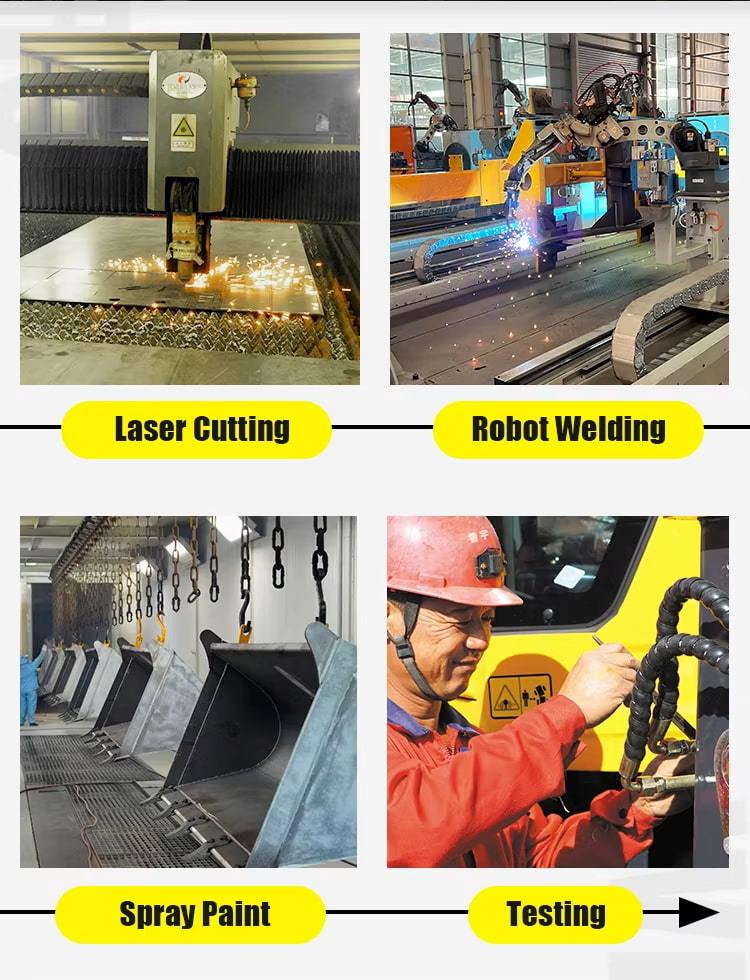
Tapping modern manufacturing hubs in China lets us scale production and hit tight delivery windows without cutting corners on structural integrity.
Step 3: Lower Your Risk with a Pilot Order
When entering a new manufacturing relationship, we always encourage an initial order of 2 or 3 units.
This pilot approach lets operators test structural welding, hydraulic performance, and general build quality directly on their own turf—without committing to massive capital expenditure up front. It is a formula that has helped LUYU Machinery send ~2,000 machines to Latin America and South Africa annually on long-term dealer trust.
3. What a Reliable Supplier Looks Like
Dedicated R&D and Workforce: Quality support takes people. With around 600 employees, we handle everything in-house—CAD design, assembly checks, post-sale troubleshooting.
Strategic Warehousing: Shipping heavy equipment cross-border is expensive and slow. Trusted partners keep iron on the ground near key hubs. LUYU Machinery runs regional facilities in Thailand, Indonesia, Brazil, and Australia to streamline transit and lower freight overhead.
Full-Spectrum After-Sales: Equipment working in harsh environments will eventually need servicing. A solid supplier backs you up with custom attachment fittings, rapid spare parts fulfillment, and direct field support.
4. Field Case: How a South American Dealership Scaled Up
One farm equipment importer in South America hesitated to source overseas. Hidden quality flaws and slow parts shipments scared them. Their motto was straightforward: "Prove it in the field first."
We proposed a modest trial run of 2 to 3 units, pairing the machines with complete technical documentation and on-site factory support. Following trade show meetings and direct visits, trust grew organically.
The test units passed every stress test on local farms, prompting the dealer to shift from tentative sampling to steady, large-scale fleet orders. Today, they remain one of our longest-standing regional partners.
5. Quick Q&A
Q: Will driving these excavators across paved roads damage municipal concrete?
A: Definitely not. The heavy-duty rubber tires on LUYU Machinery excavators balance solid traction with road protection. They roll smoothly across asphalt and paved streets without causing surface damage, making site-to-site travel hassle-free during city work.
Q: How do international buyers protect their investment before making major orders?
A: We suggest running a small pilot order of 2 to 3 units. Partnering with a manufacturer that operates overseas warehouses further ensures you get prompt spare parts and technical service close to home.
The Bottom Line
Getting a grip on how a wheeled excavator functions is really just step one in putting your capital to work. The bigger factor in your long-term ROI is picking a manufacturing partner backed by solid engineering, proven international shipping routes, and actual custom-build flexibility.
Ready to expand or refresh your fleet? LUYU Machinery has you covered. Drop us a message on WhatsApp or email, and we will map out an equipment setup built specifically around your operational goals.
 facebook
 twitter
 linkedin
 A Practical Guide to Modern Wheeled Excavator Selection and High-Efficiency OperationTight urban sites restrict tracked diggers. Our guide helps contractors select agile wheeled excavators to lower overhead, balance investment, and boost output.
 Stricter Urban Rules Favor Wheel ExcavatorsExcavators play a crucial role in urban construction projects. Tasks such as digging foundations, laying pipelines, and clearing sites all depend on them. In busy Australian cities like Sydney, Melbourne, and Brisbane, space is tight. Rules are strict. The right equipment saves time, ensures safety and controls costs. Excavators are capable of performing heavy-duty work safely and efficiently, making them vital to fast and smooth urban construction projects. For these types of jobs, wheel excavators are the better choice.
 Why Modern Farms are Swapping Old Gear for a Wheel ExcavatorLet's face it: traditional farm equipment often feels too clunky for today's fast-paced operations. That is exactly why we are seeing a massive shift toward using a wheel excavator on the job site instead of just big tractors. Modern agricultural excavators—and specifically a versatile compact wheeled excavator like the Luyu LY75C—are proving that you don't need a massive fleet to get the heavy lifting done. Whether you're cutting drainage ditches or leveling a field, these machines bring a mix of speed and power that old-school tracked units just can't match.
 LUYU LY75C Wheel Excavator: Agile, Efficient, and Built for Real-World ProjectsThe LUYU LY75C is a compact yet powerful wheel excavator designed precisely for these work scenarios. With optimized performance in power, structure, control, and fuel economy, it offers outstanding reliability while helping users cut costs and boost productivity on every job site.
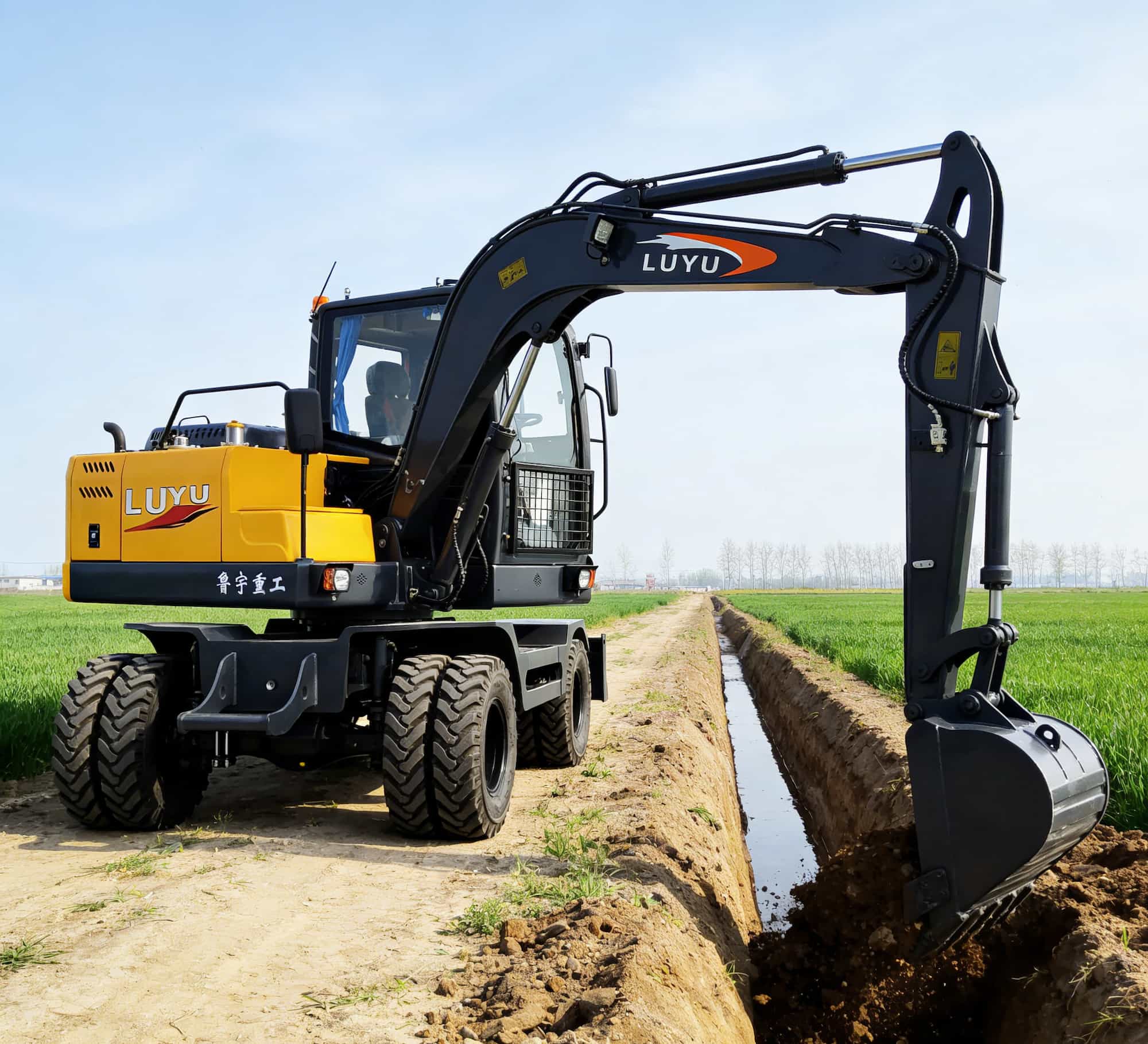
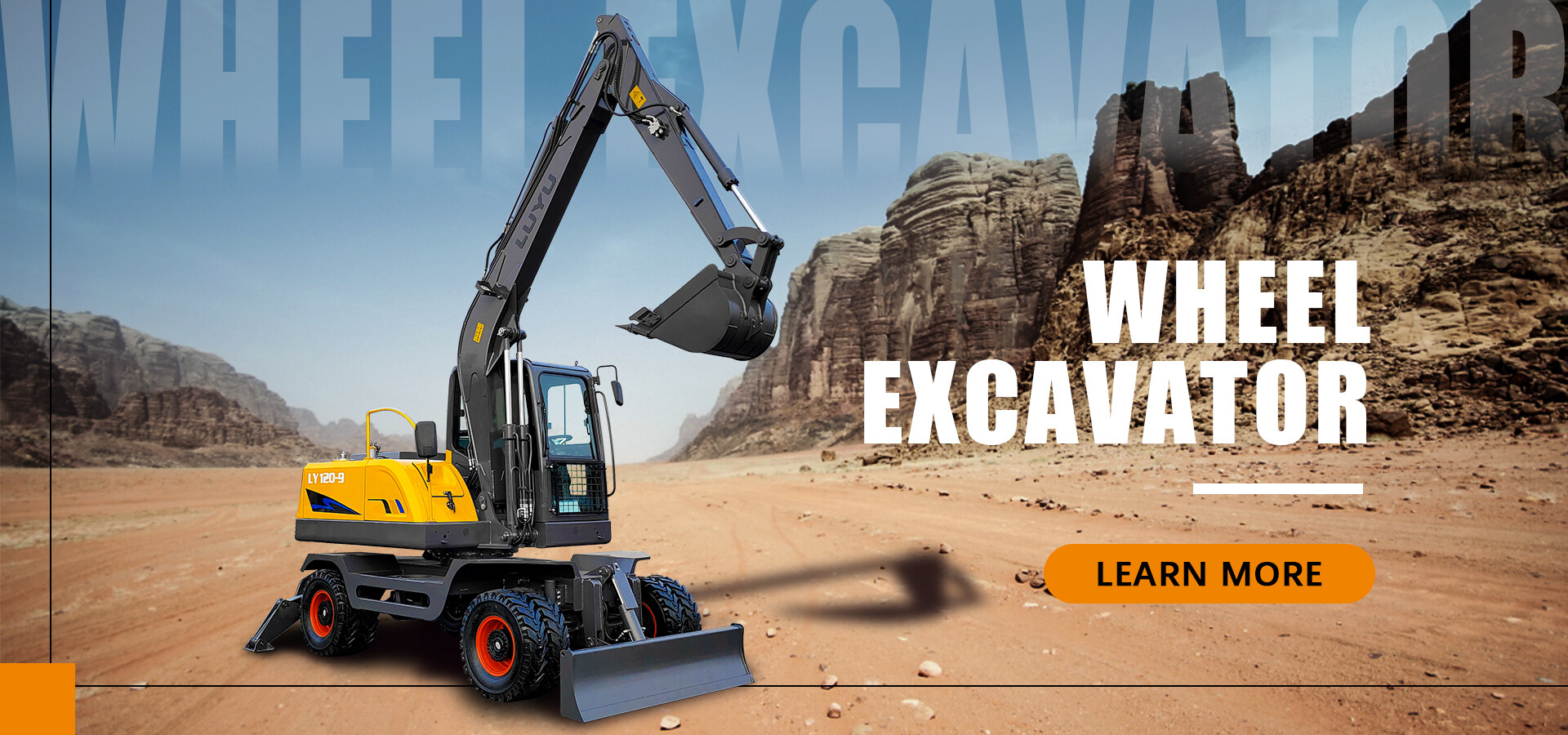
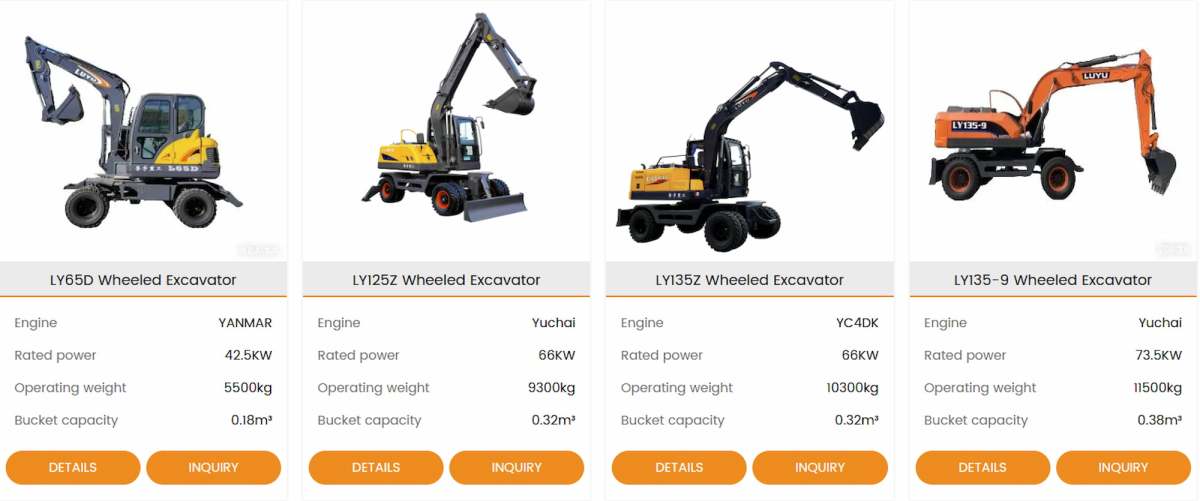
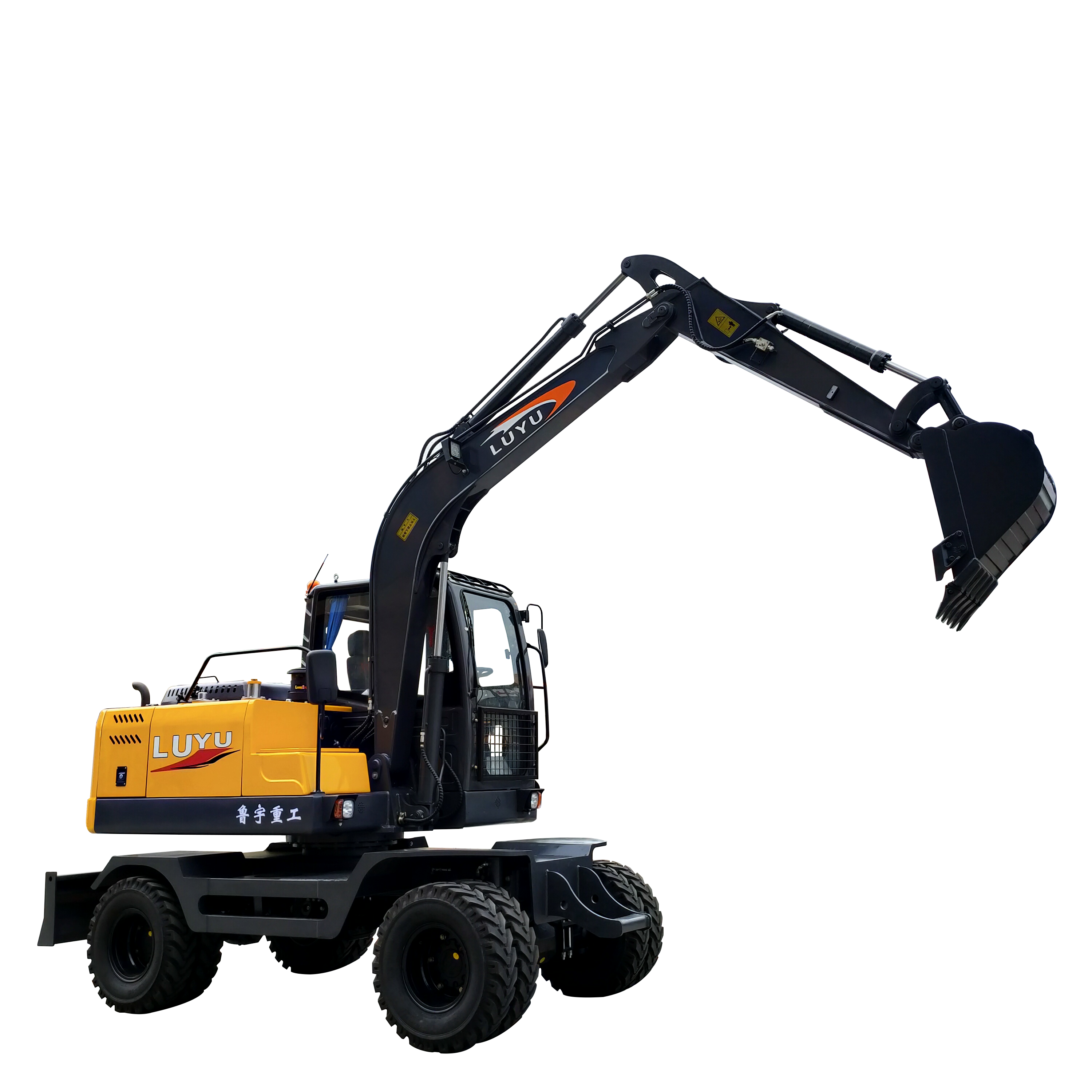
 LY75C Wheeled ExcavatorThe Luyu LY75C wheeled excavator delivers high-performance hydraulics and exceptional fuel efficiency. Perfect for urban construction, roadwork, and agriculture. Reliable, durable, and ready for global delivery. Get a quote!
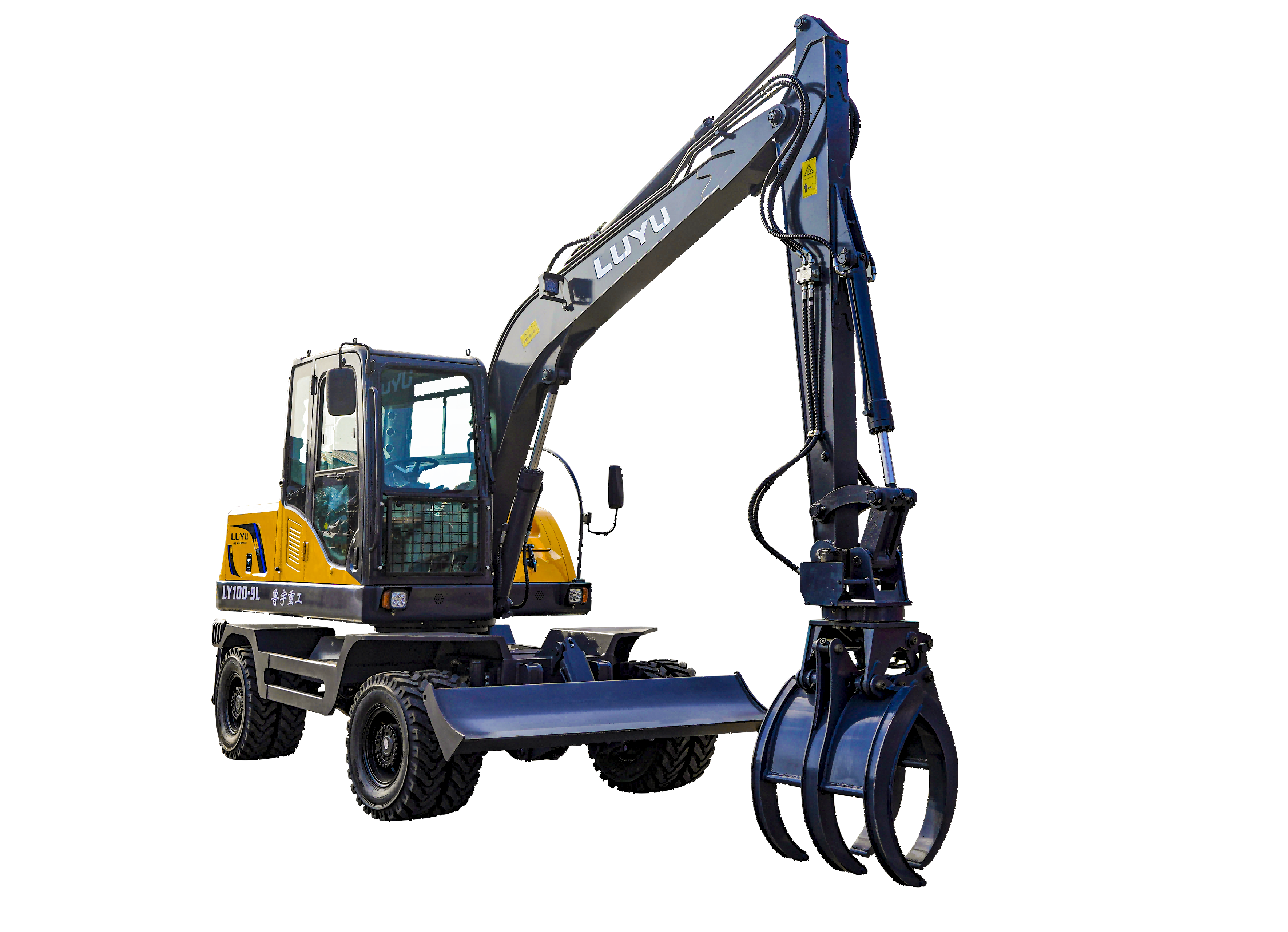
 LY100Z Wheeled ExcavatorWood Grabber Grapple Wheel Excavator Machine.Suitable for sugarcane, cotton and other crops.Famous brand of axles, gear boxes,wet brakes, making travel more safely.Longer wheelbase design to make drive more stable.
 LY125Z Wheeled ExcavatorLUYU LY125Z Wheeled Excavator With a digging height of 7.5 meters and a digging depth of 4.4 meters, it is highly flexible and widely adaptable.
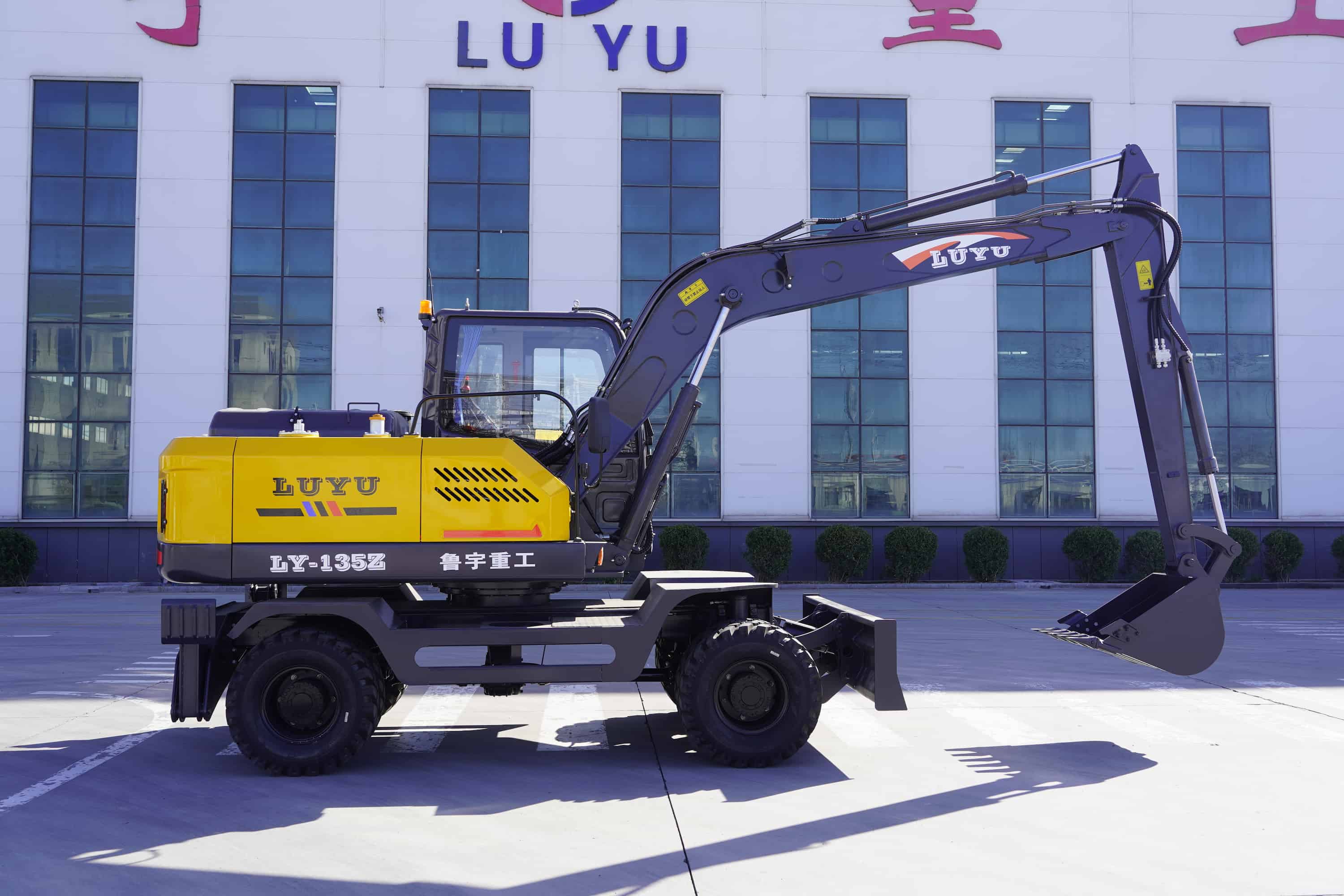
 LY135Z Wheeled ExcavatorThe LUYU LY135M-10Z wheel excavator log grapple feels noticeably more stable during travel work. With the reinforced axle and upgraded braking system, the machine moves more smoothly between loading points.

Send Your Inquiry